Enhancing customer experience through Voice AI
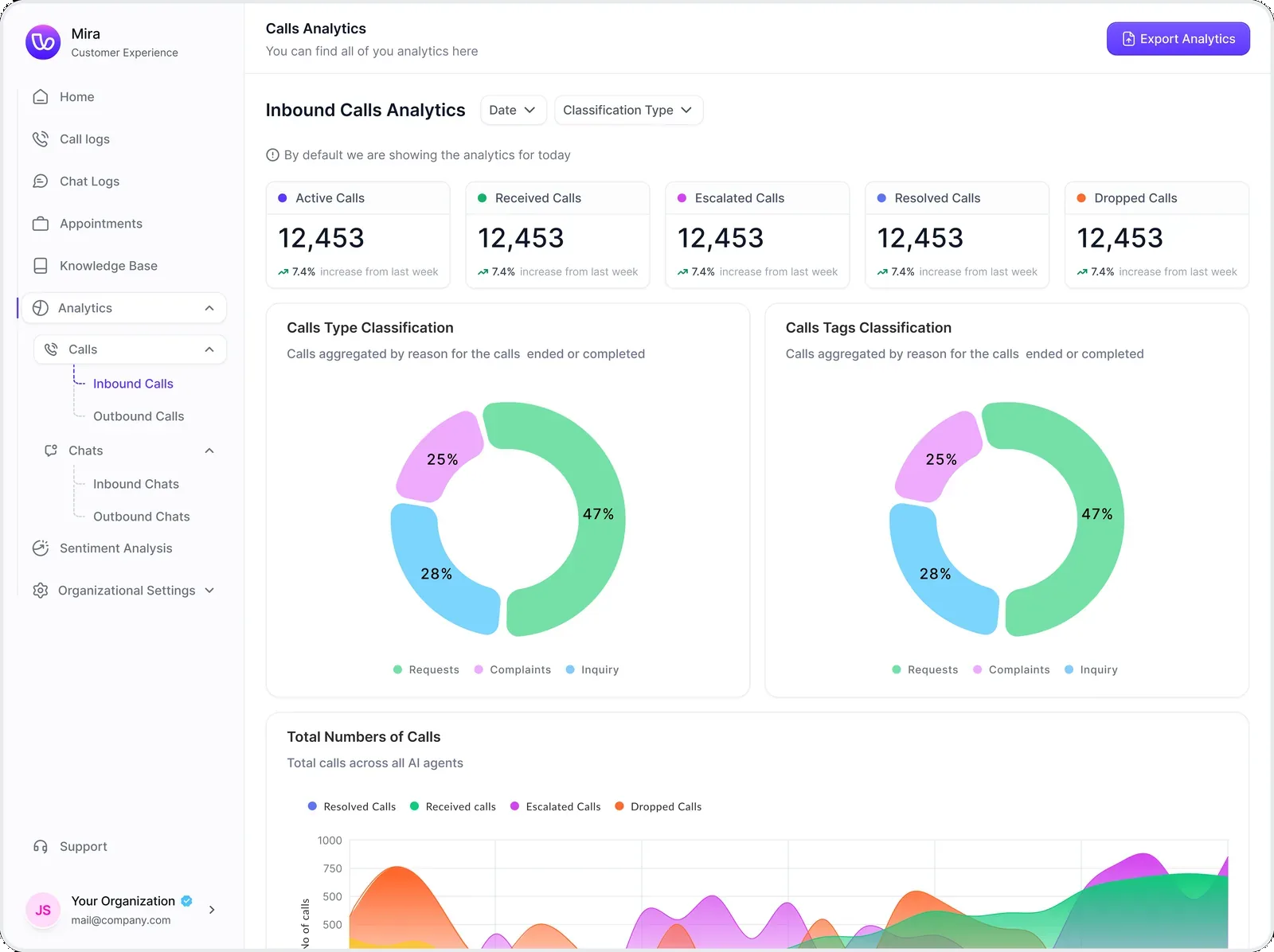
MIRA is an enterprise Voice-AI platform that answers, understands, and resolves customer calls and chats, deployed across UAE government, healthcare, and corporate support. I led the redesign that made it feel human, fast, and worth trusting.
- Role
- Founding Product Designer
- Company
- AI71
- Timeline
- 2024–25
- Scope
- Research · UX · Visual · Design QA
- Sectors
- Government · Healthcare · Enterprise
The problem
MIRA’s AI-driven approach was genuinely innovative — but early user feedback surfaced five gaps that were holding the experience back.
No context awareness
Responses were static. They didn’t adapt to who was calling or why, so every conversation felt impersonal.
Emotional disconnect
People calling support wanted reassurance; corporate clients wanted speed and precision. One flat tone served neither well.
Integration bottlenecks
Pulling real-time information from legacy systems was slow, and those delays showed up in the middle of live calls.
Low trust & adoption
Confidence in AI-led support was low — especially for high-stakes, emotionally charged conversations.
A “faceless” product
Voice AI is invisible by nature. Users never see a polished screen, so trust has to be earned through behaviour, not UI.
Design approach
I ran a double-diamond process — diverging to explore the problem and the solution space, then converging on what to actually build and ship.
Discover
- Problem exploration
- Foundational research
- User interviews
- Competitor analysis
Define
- Synthesising research
- Product requirements
- User stories
Develop
- Concept sketches
- Wireframes
- Prototyping
- User testing
- Design reviews
- Recommendations & rationale
Deliver
- High-fidelity designs
- Design reviews
- Handoff
- Design QA
Competitive analysis
MIRA plays in a crowded field of global and regional players. To position it well, I audited more than 100 companies — here are the leaders worth knowing.
Boost.ai
Enterprise conversational AI built for scale in banking, telecom, and government. Strong multilingual virtual agents and omnichannel support.
G42
A UAE AI leader with deep government partnerships — AI infrastructure, NLP, and speech analytics.
Emaratech
Focused on government digital transformation: secure transaction automation and AI-driven workflows.
Open CX
An AI-powered omnichannel support platform with a strong automation focus, but a limited government footprint.
Intella
A regional leader in Arabic NLP and sentiment analysis, specialising in call-centre analytics.
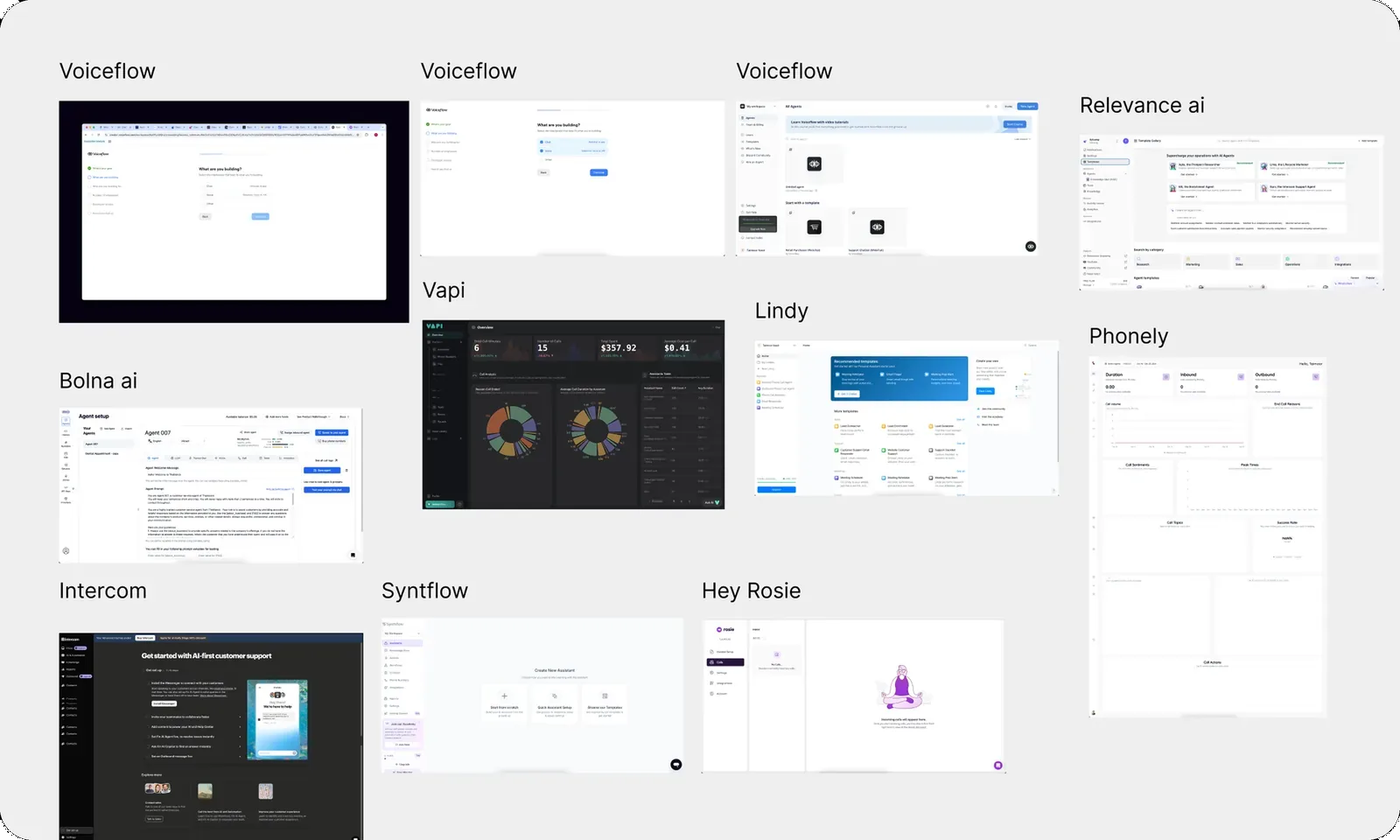
A slice of the 100+ company audit across the global and MENA Voice-AI landscape.
Design bets from the audit
Three capabilities the audit pushed us to invest in.
Adaptive conversation
MIRA adjusts its tone and pacing in real time, based on live sentiment.
Deep integration
It slots into hospital and corporate workflows, meeting industry-specific needs instead of forcing a generic one.
Localised NLP
Arabic speech recognition and sentiment analysis, built for MENA deployments.
User interviews
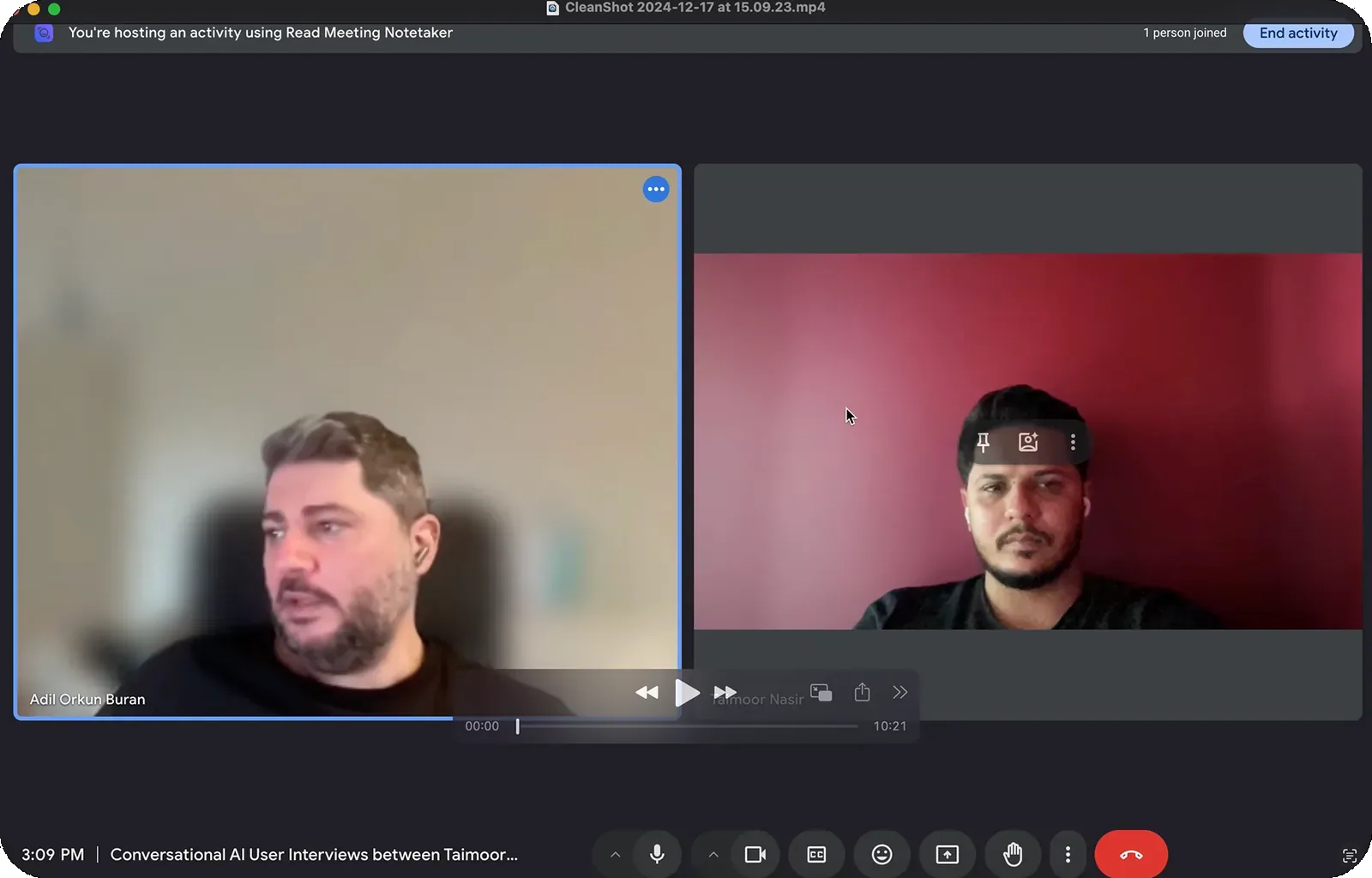
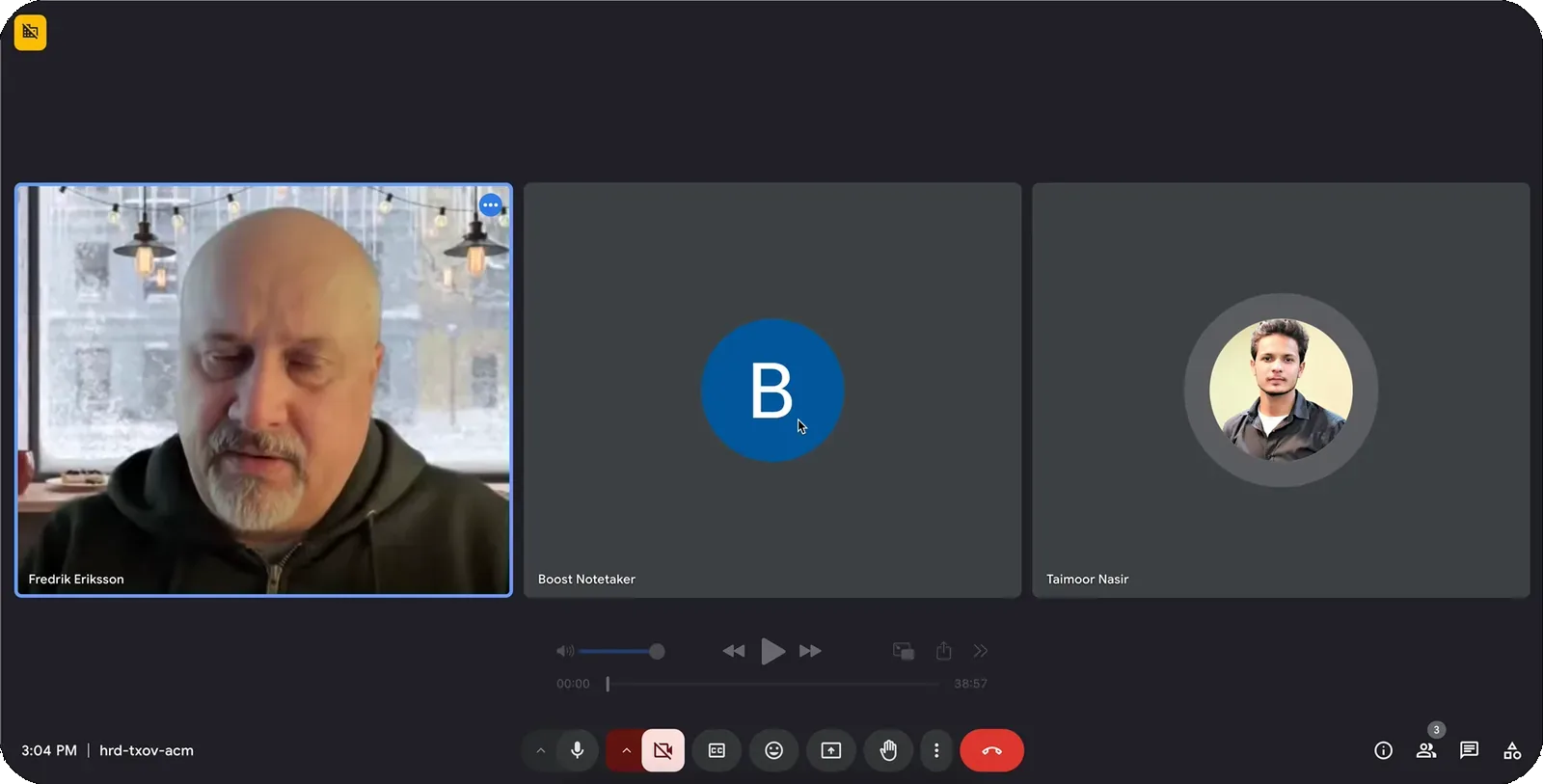
20 in-depth interviews across healthcare and corporate support — including leaders at Talabat, Cisco, Intercom, and the Head of Customer Support at Yango.
What the interviews revealed
Two audiences, two very different sets of needs — and a clear mandate for how the AI should behave.
Healthcare professionals
Patient-facing, emotionally sensitive calls.
- 85%said the AI needed a calm, reassuring tone with patients.
- 70%reported patients felt discomfort with robotic responses.
- 60%found the lack of personalised responses frustrating.
Corporate agents
High-volume, efficiency-driven support.
- 90%preferred clear, concise responses with less back-and-forth.
- 75%cited slow system integration as a key barrier.
- 65%needed quick resolution without AI misinterpretations.
On-site observation
At Reem Hospital
- Observed 15 emergency calls — 60% needed an agent override when the AI missed the urgency.
- Medical staff wanted better AI workflow suggestions for confirming and rescheduling appointments.
At Axiom
- Call misrouting from AI misunderstanding pushed average call times up by 20%.
- Agents often fell back to manual handling, which chipped away at trust in the AI.
The impact
What changed after the redesign.
Operational efficiency
Call-handling times fell by 31.5%.
Support efficiency
Support efficiency rose 5% at Reem Hospital and 43% at Axiom.
Faster onboarding
Organisation onboarding time fell by 75%: a structured, no-code flow replaced manual setup.
More AI adoption
Confidence in AI-led interactions lifted enterprise usage by 20%.
Better accuracy
AI misinterpretation dropped by 45%.
Less manual handling
Human intervention fell by 35%, freeing up agent time.
User flow & information architecture
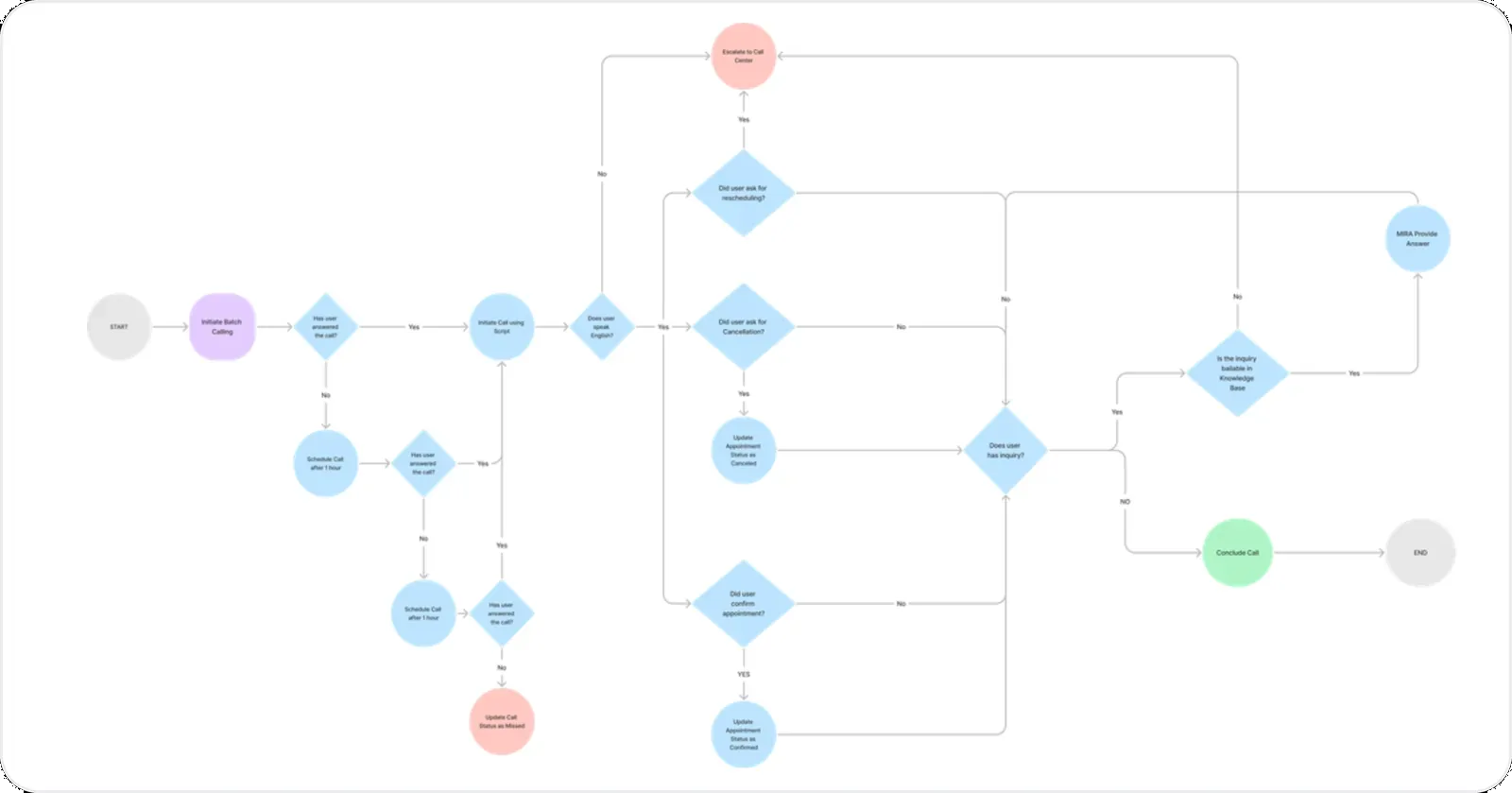
Managing customer interaction — the core call-handling logic. (Flow diagrams are blurred for NDA.)
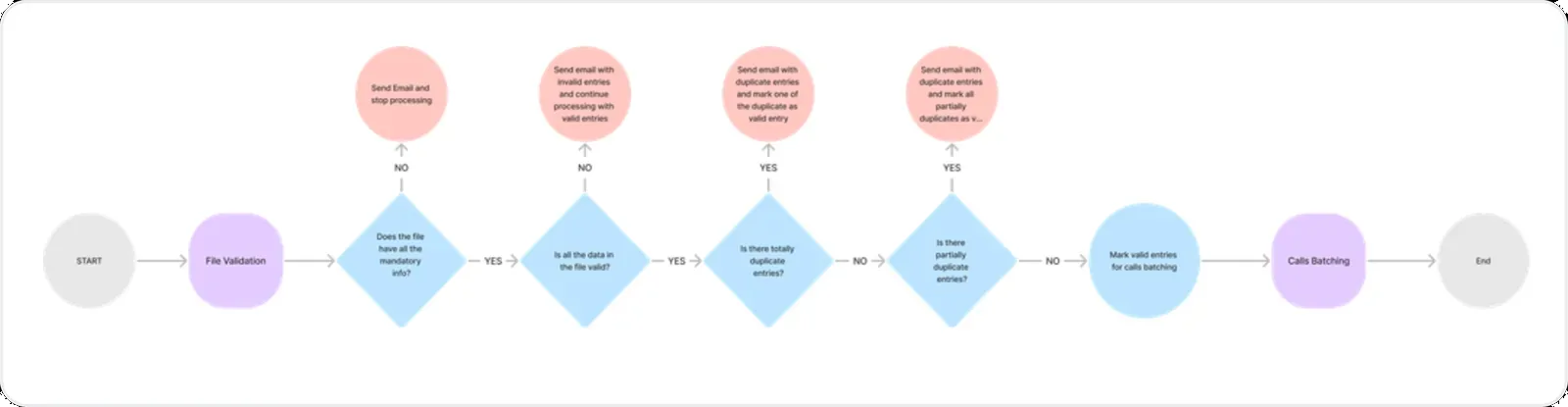
Appointment data validation — checking appointment details end to end.
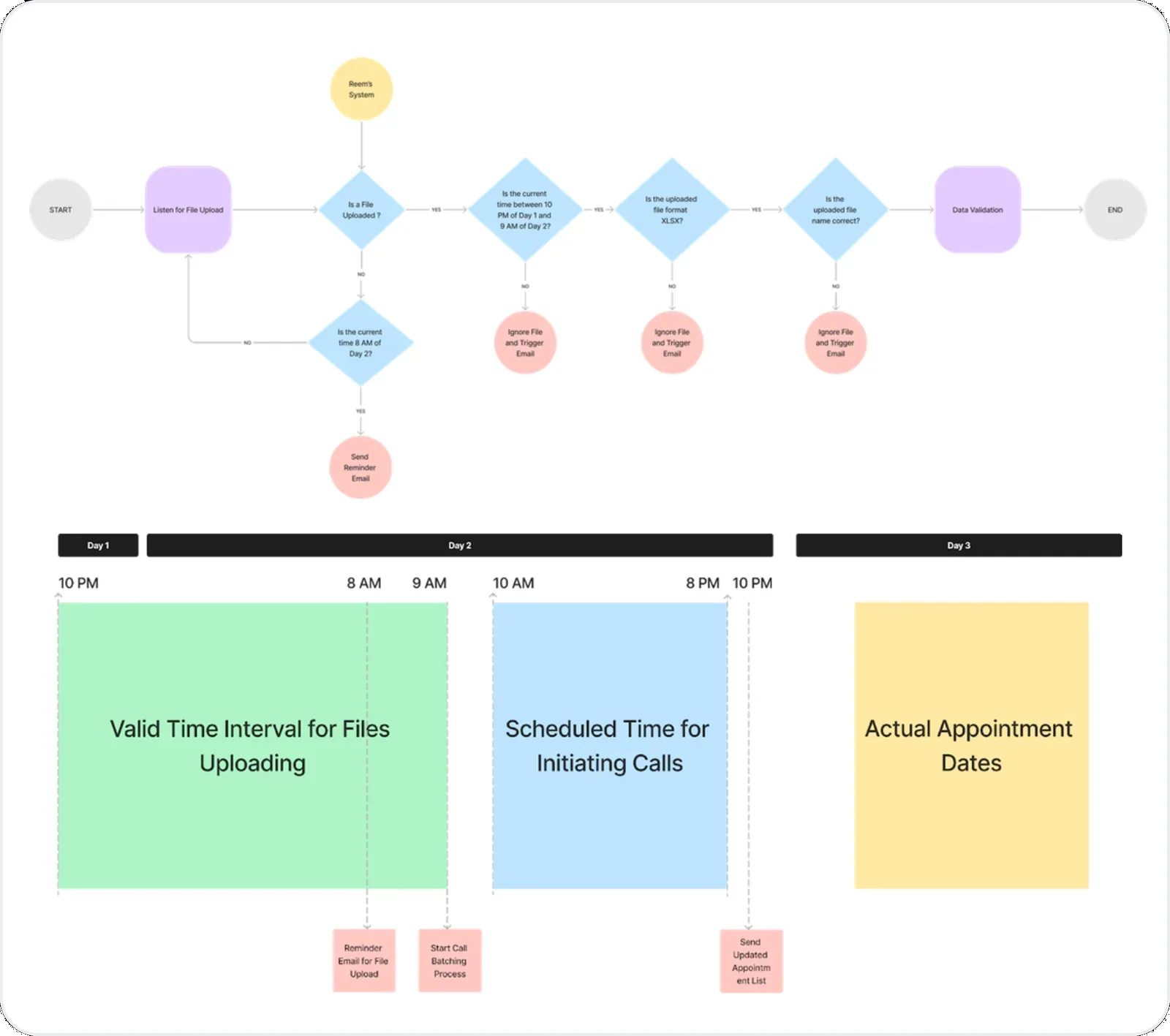
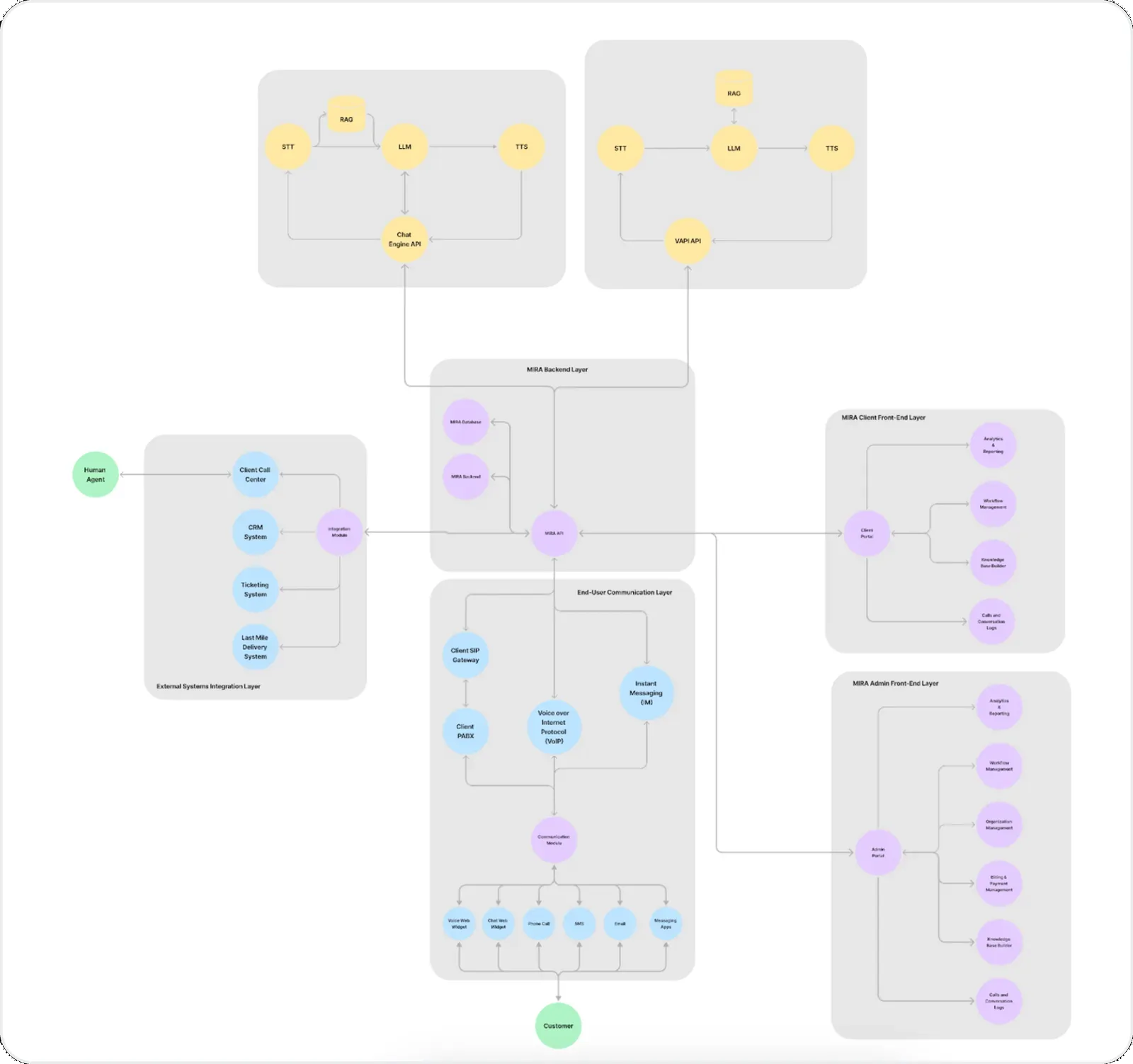
File upload & validation, and MIRA’s entire modular flow — every module, connected.
The product
The platform spans sixteen-plus screens — analytics, calls, chats, appointments, the knowledge base, and organisation management. Here they are in full.
Analytics & reporting
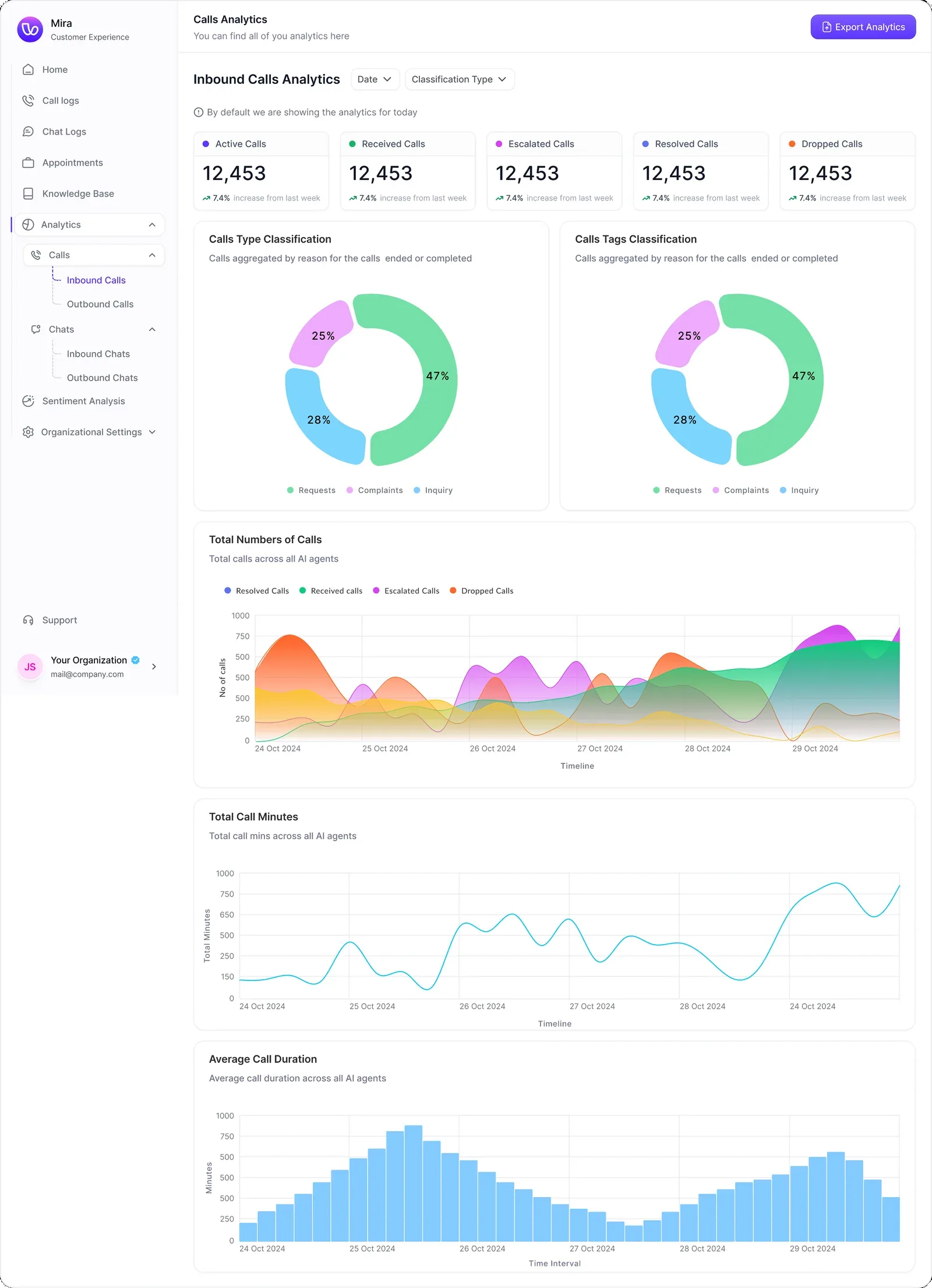
A quick, bird’s-eye view of every organisation.
Sentiment analysis
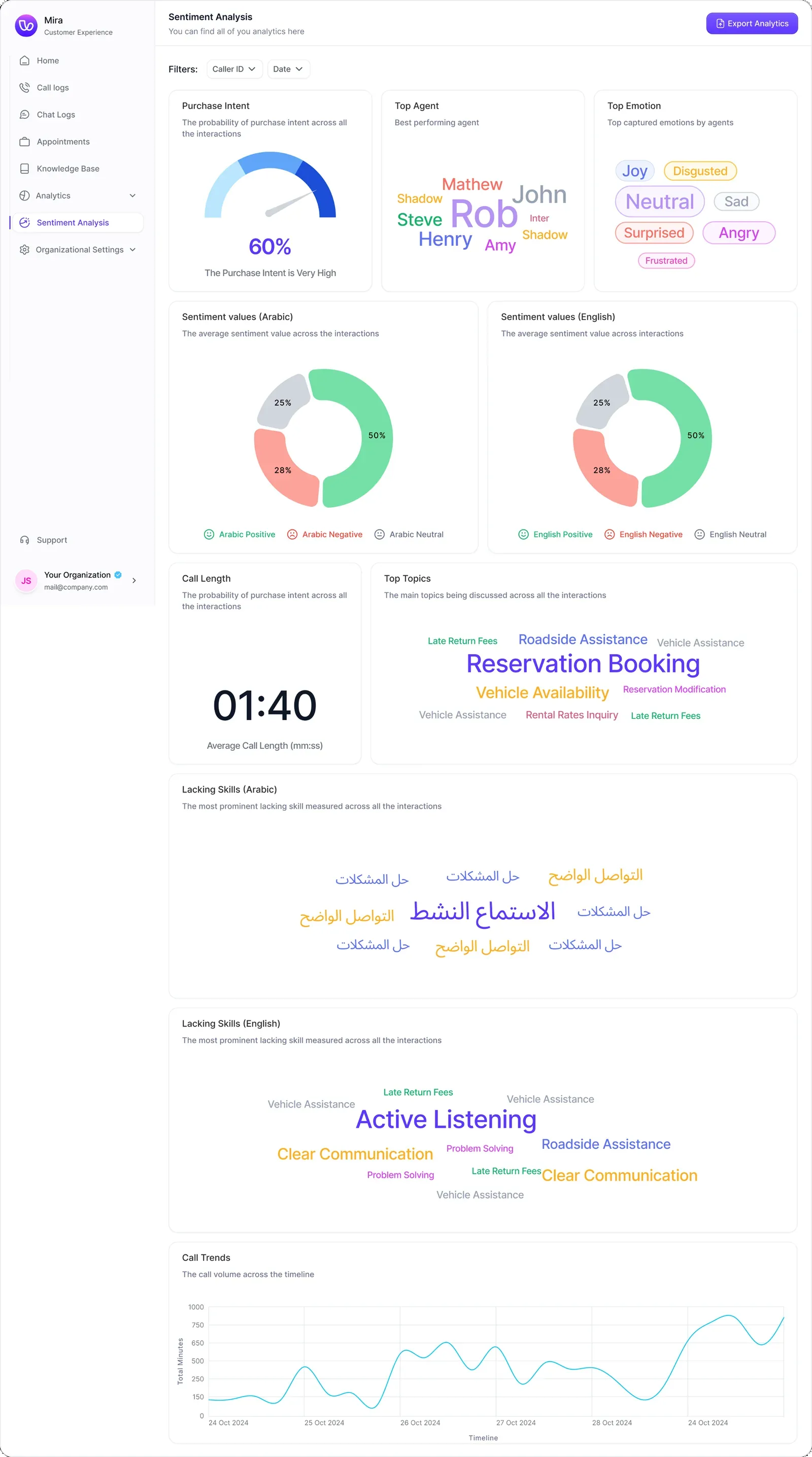
User sentiment, captured to sharpen the AI’s responses.
Call logs
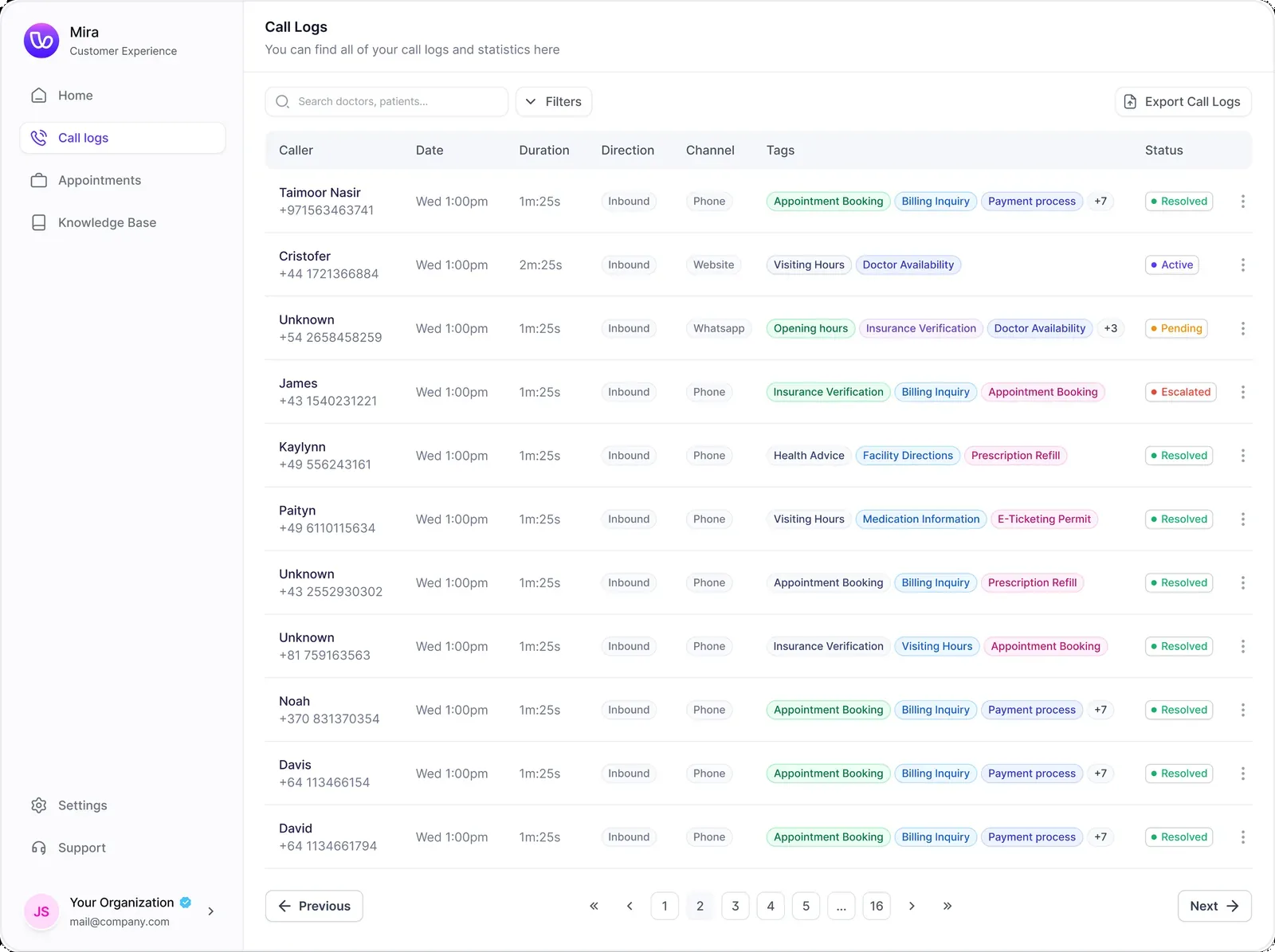
Every call each AI agent handles — with a tagging system I introduced to make the AI–human handoff legible.
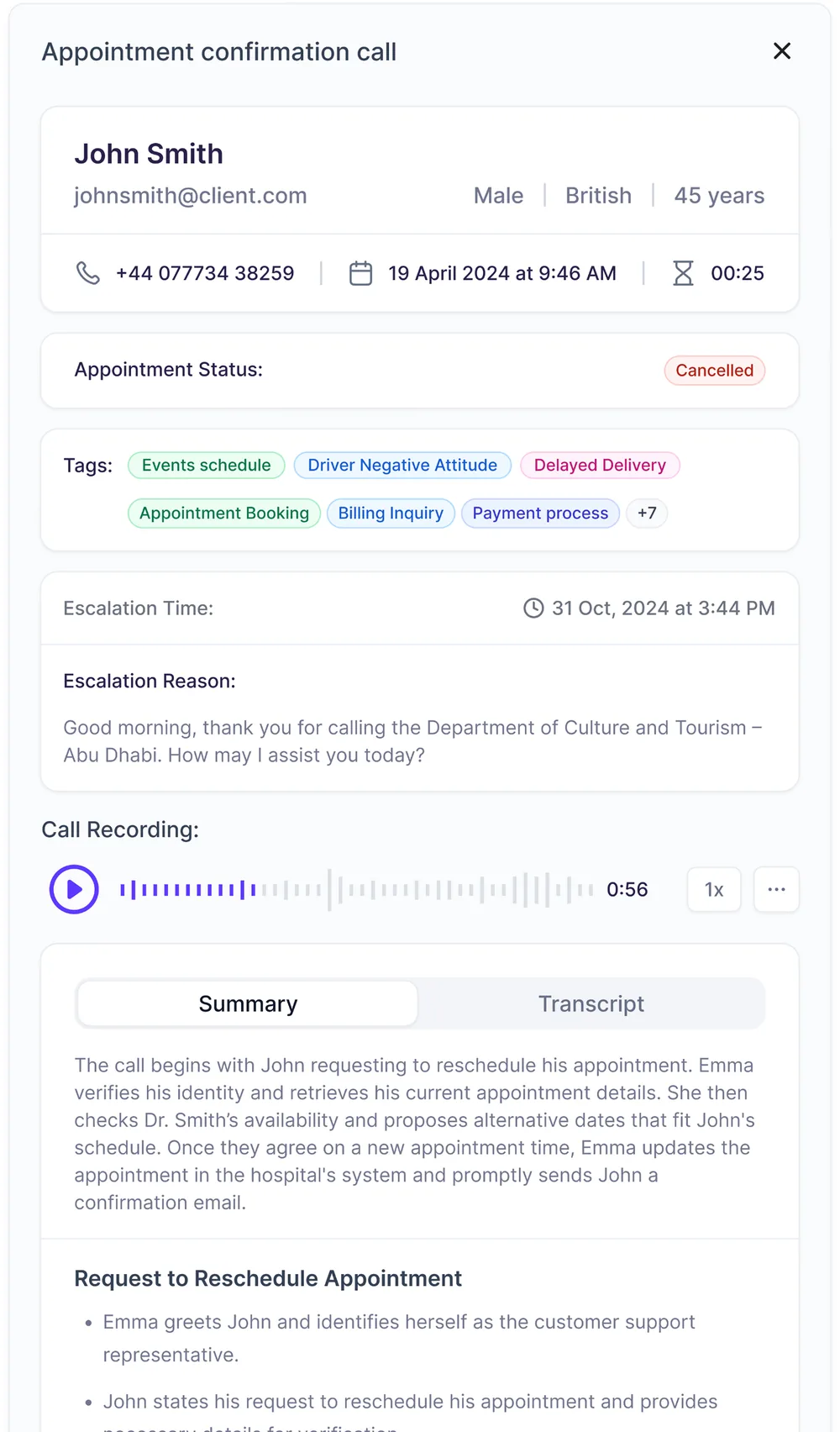
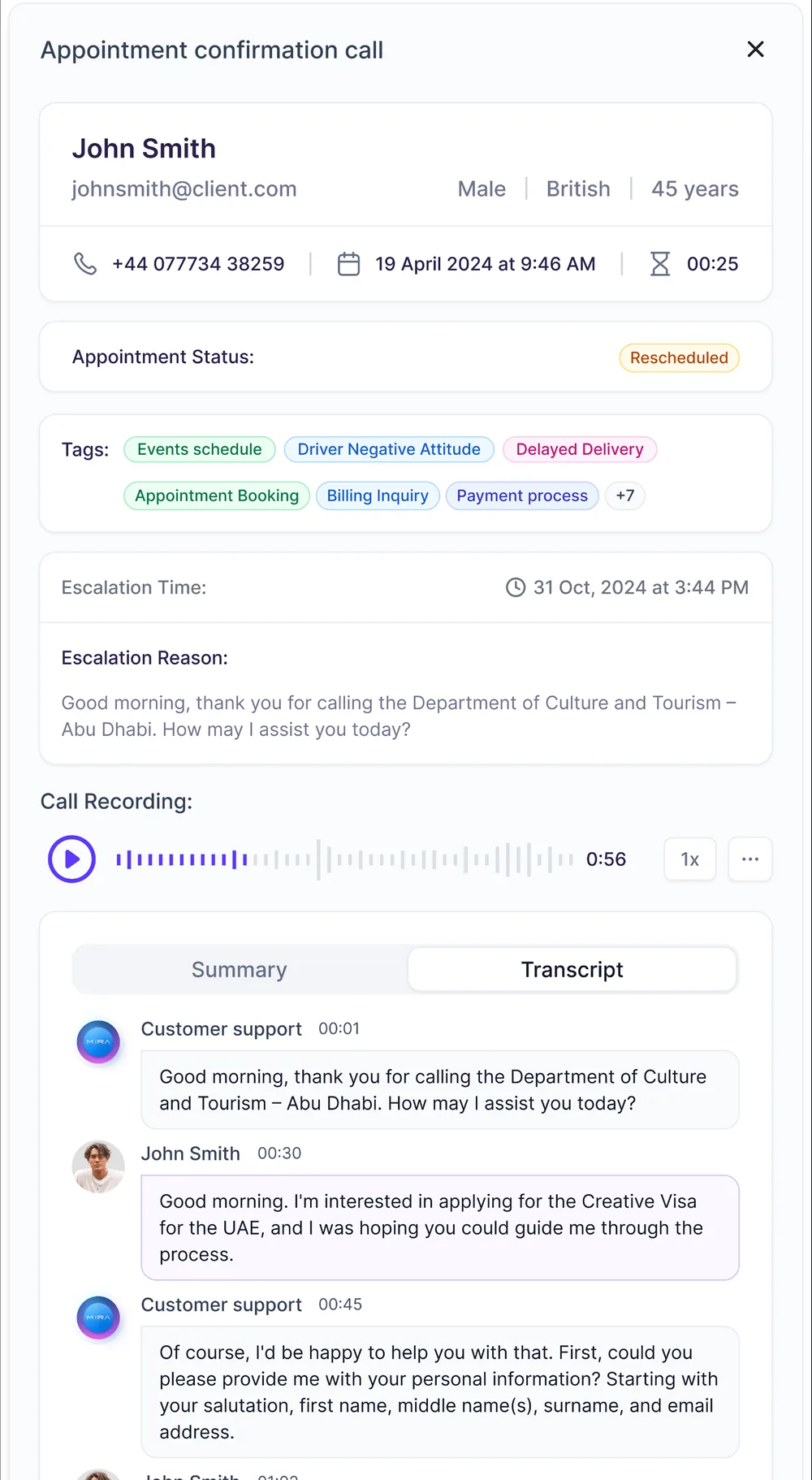
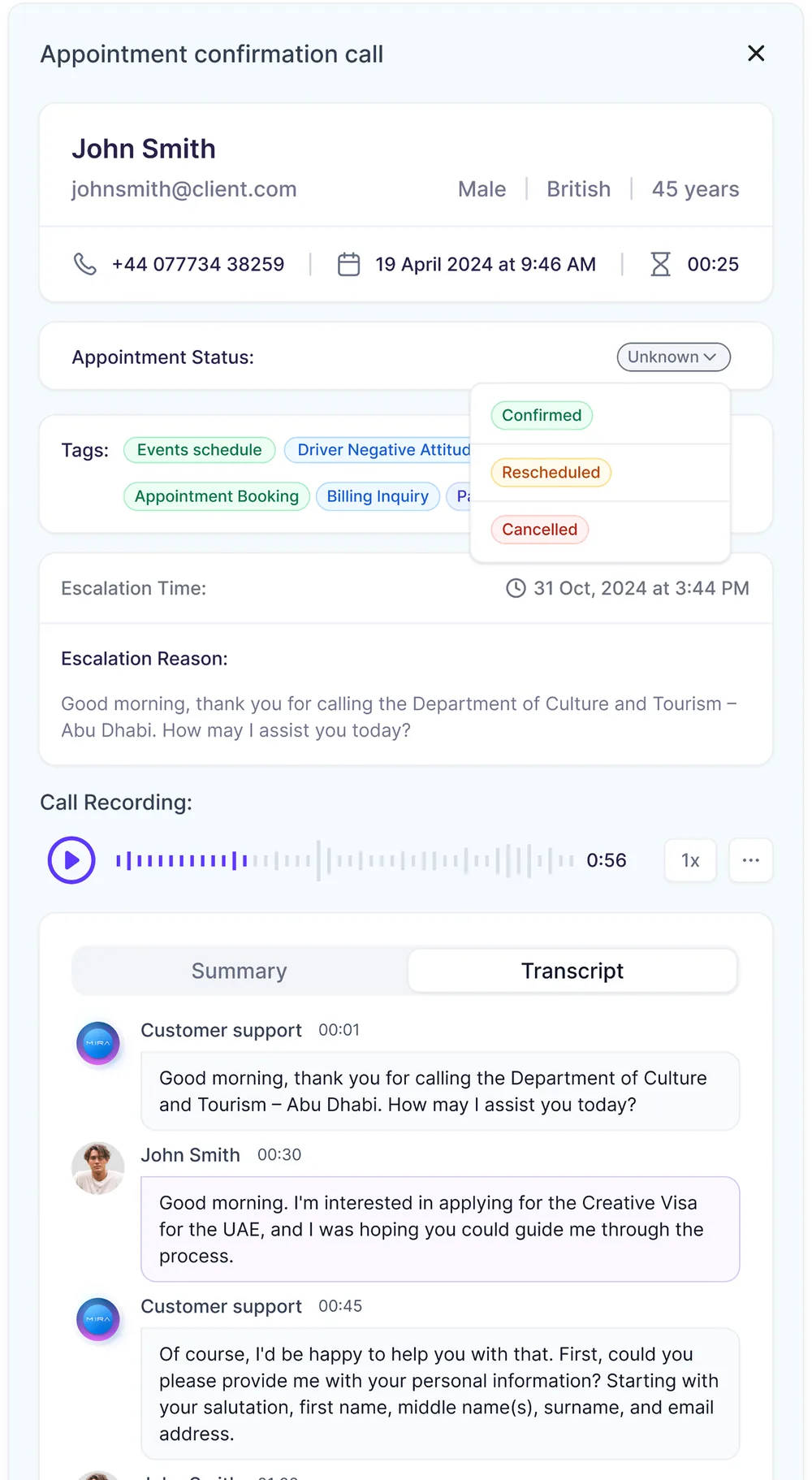
Call detail drawer
Every call opens into a detailed view — recording, transcript, escalation reason, caller and appointment details.
Chat history
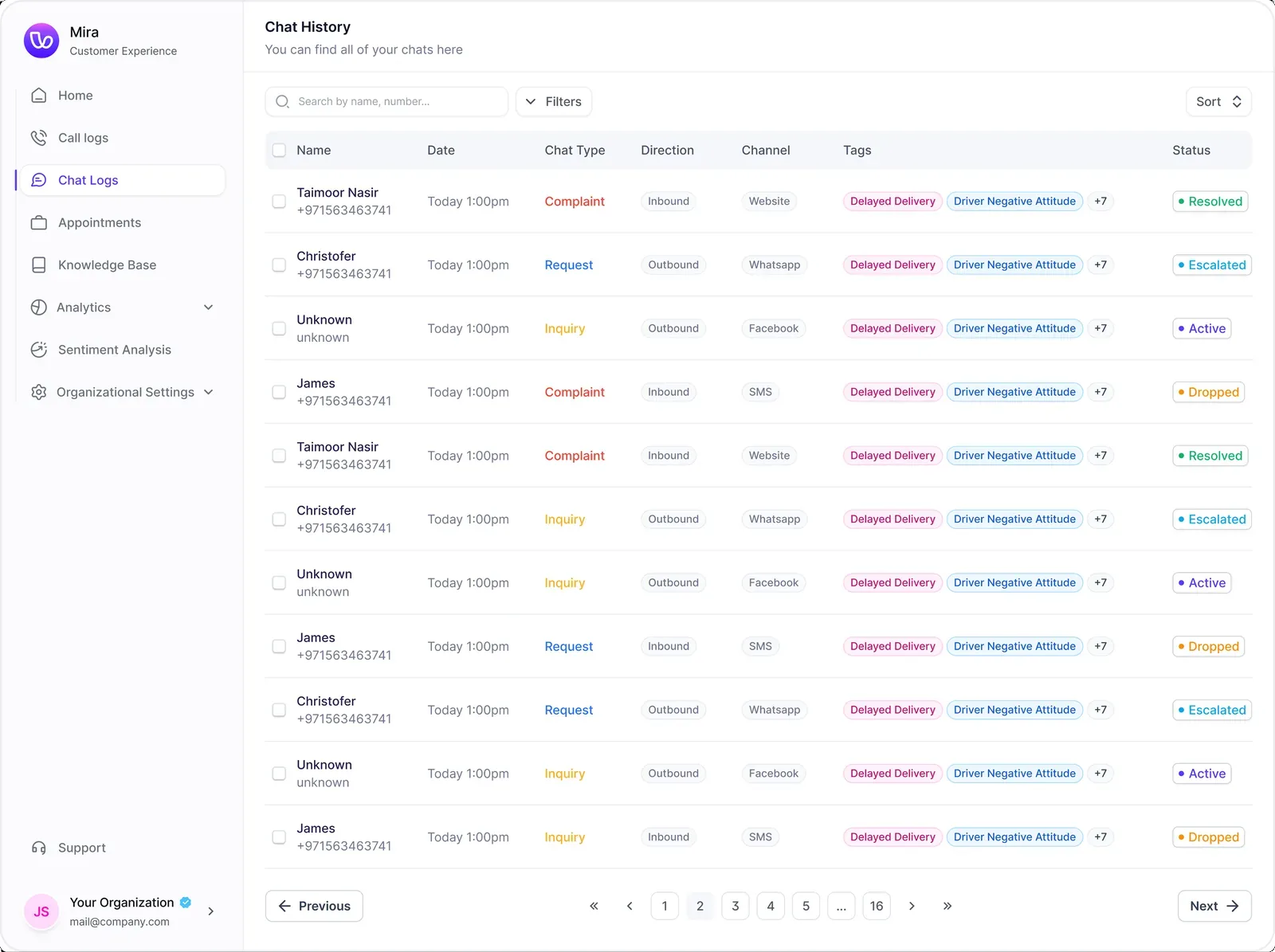
Chats across WhatsApp, website, and SMS, organised by a new “Chat Type”.
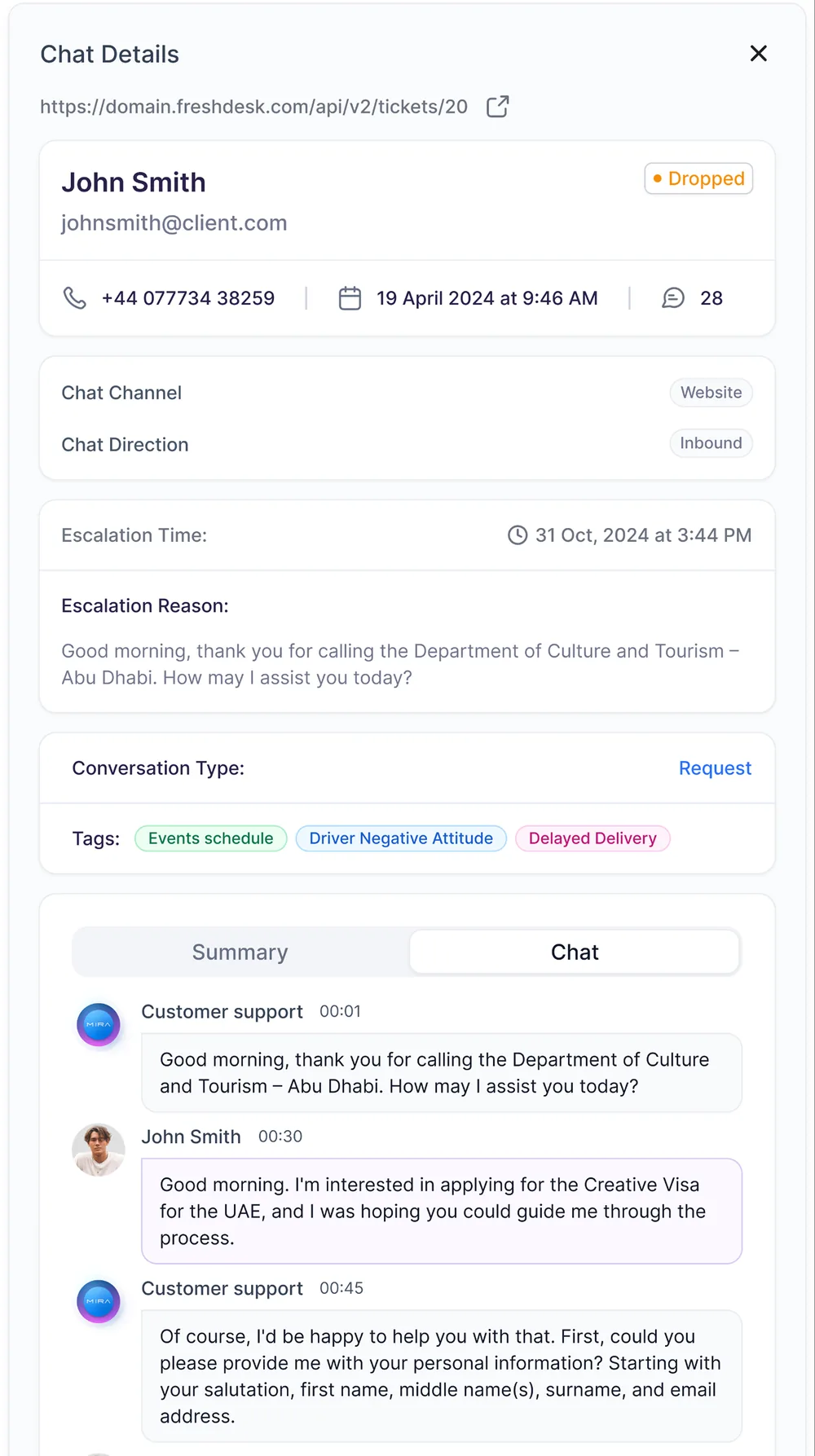
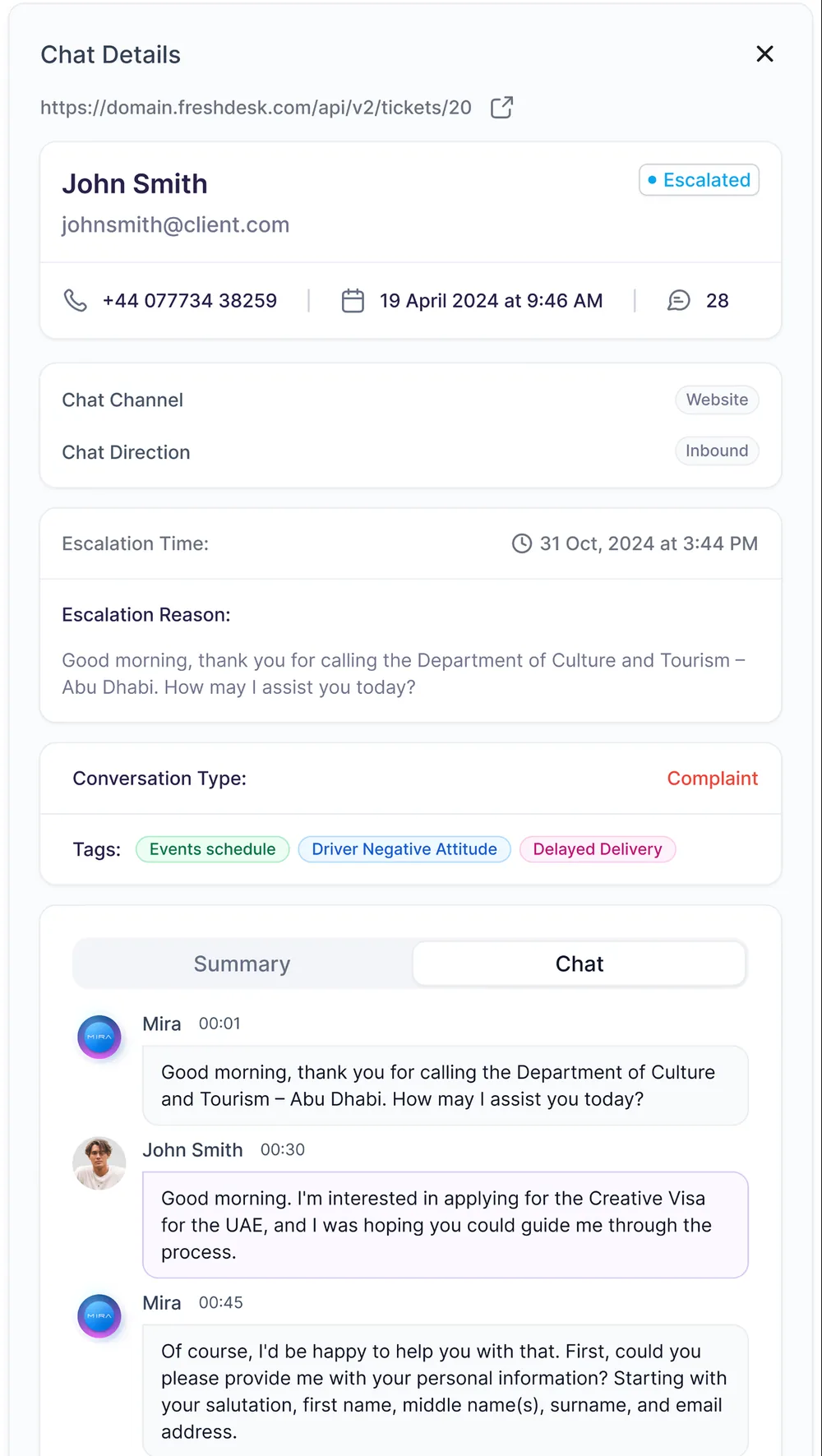
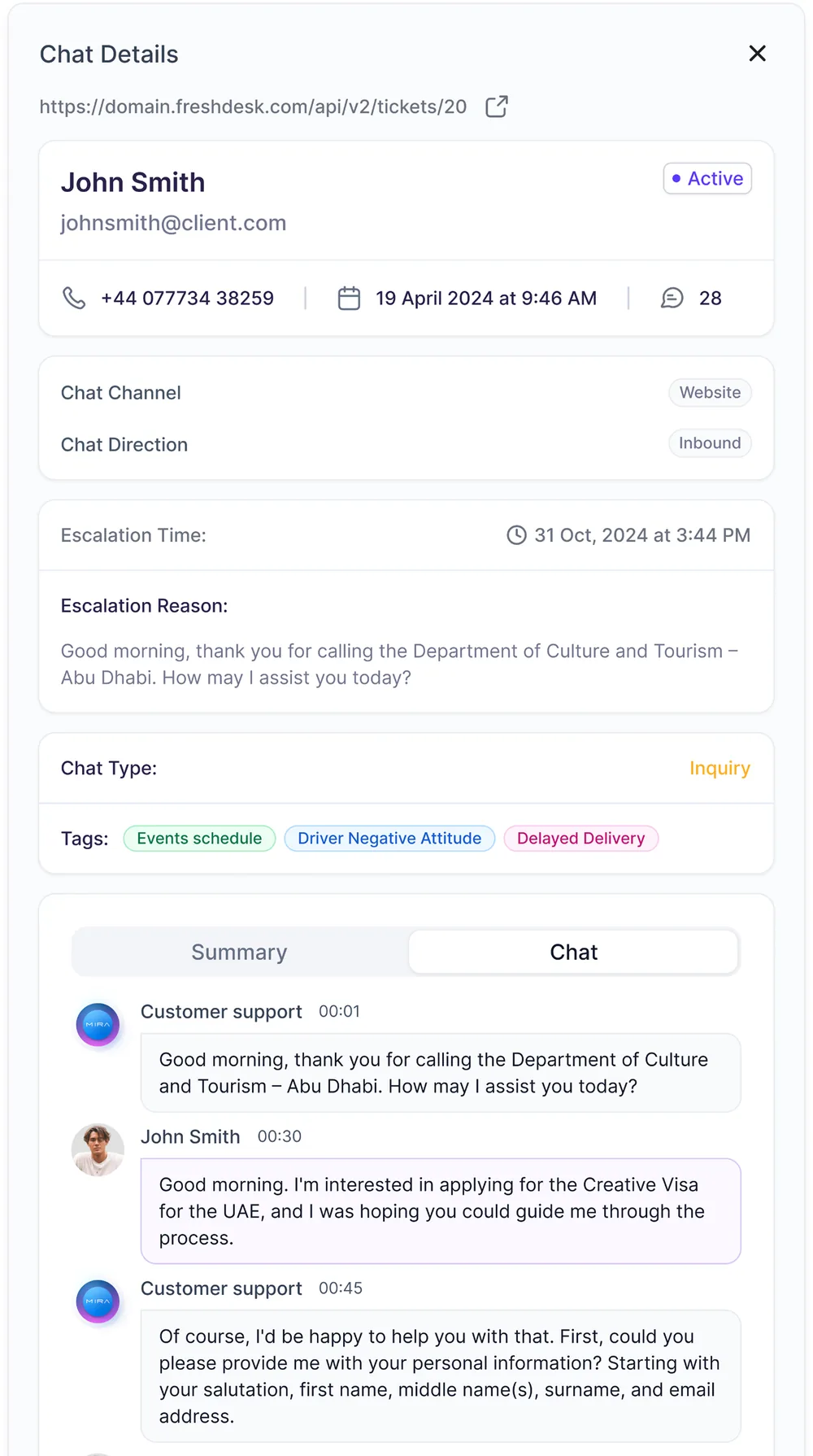
Chat detail drawer
Each chat has a detailed view — channels, escalation reasons, and the full transcript.
Appointment manager
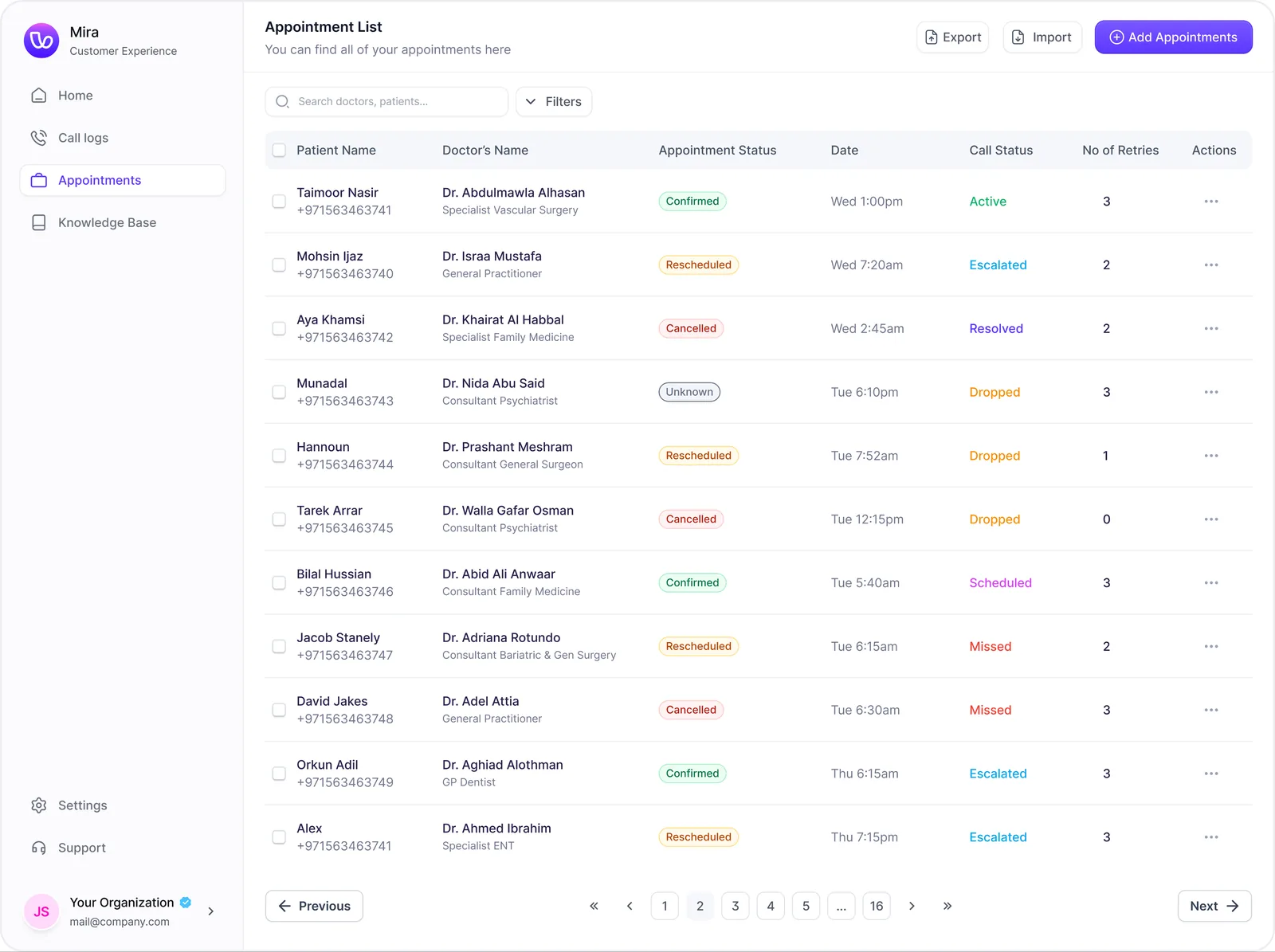
Every appointment the AI schedules, in one place.
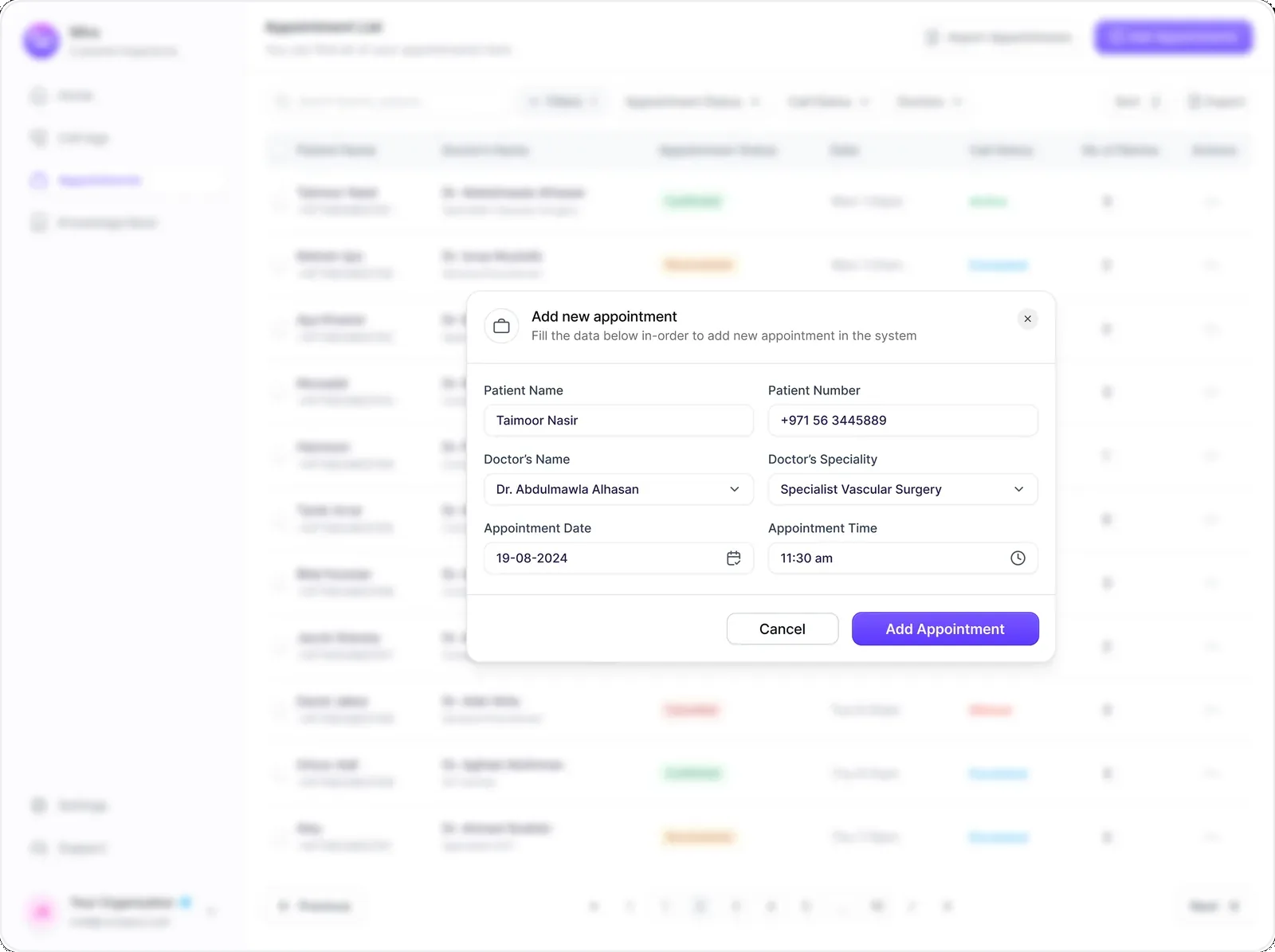
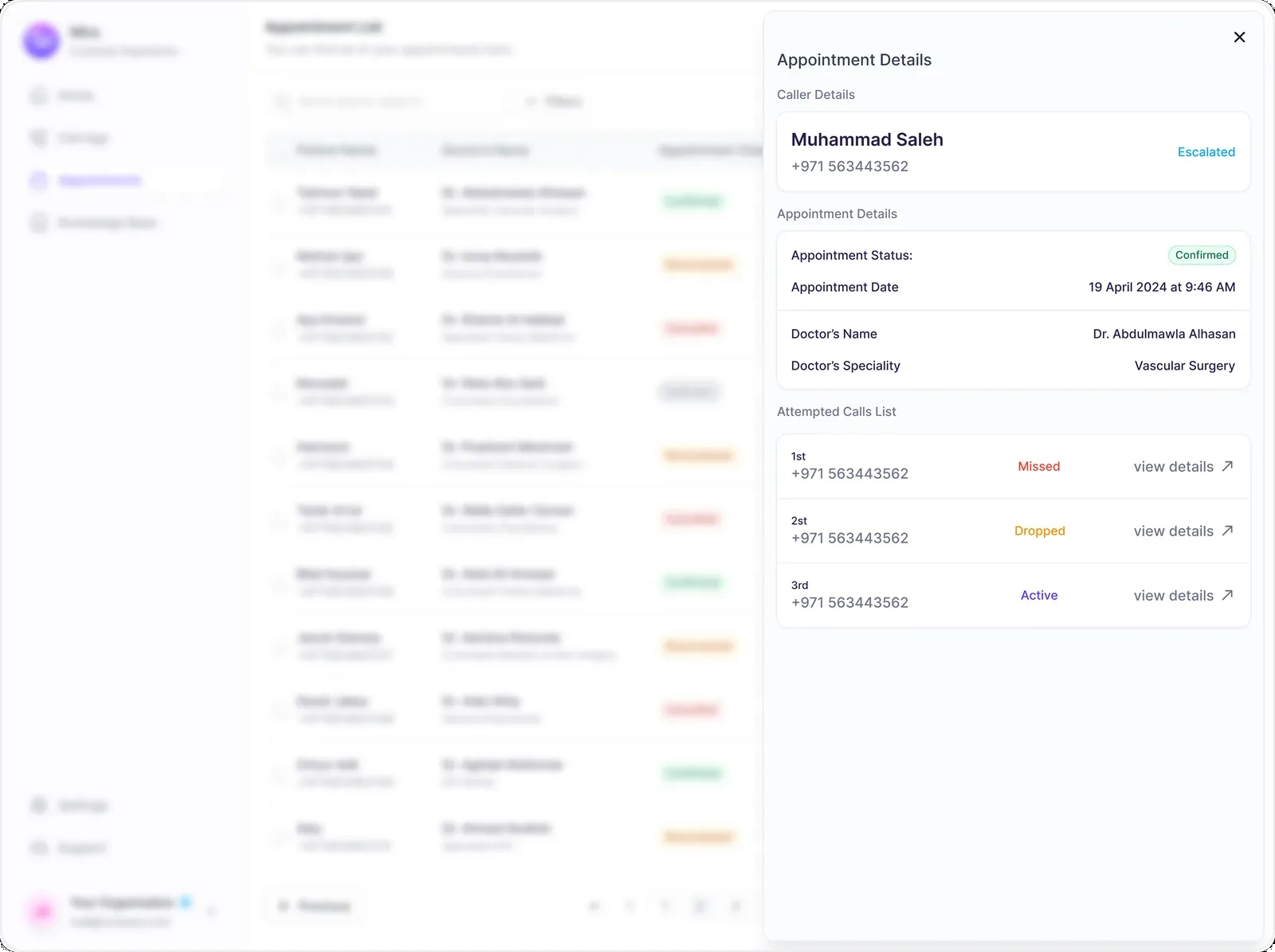
A quick manual booking, and the full record for a single appointment.
Knowledge base
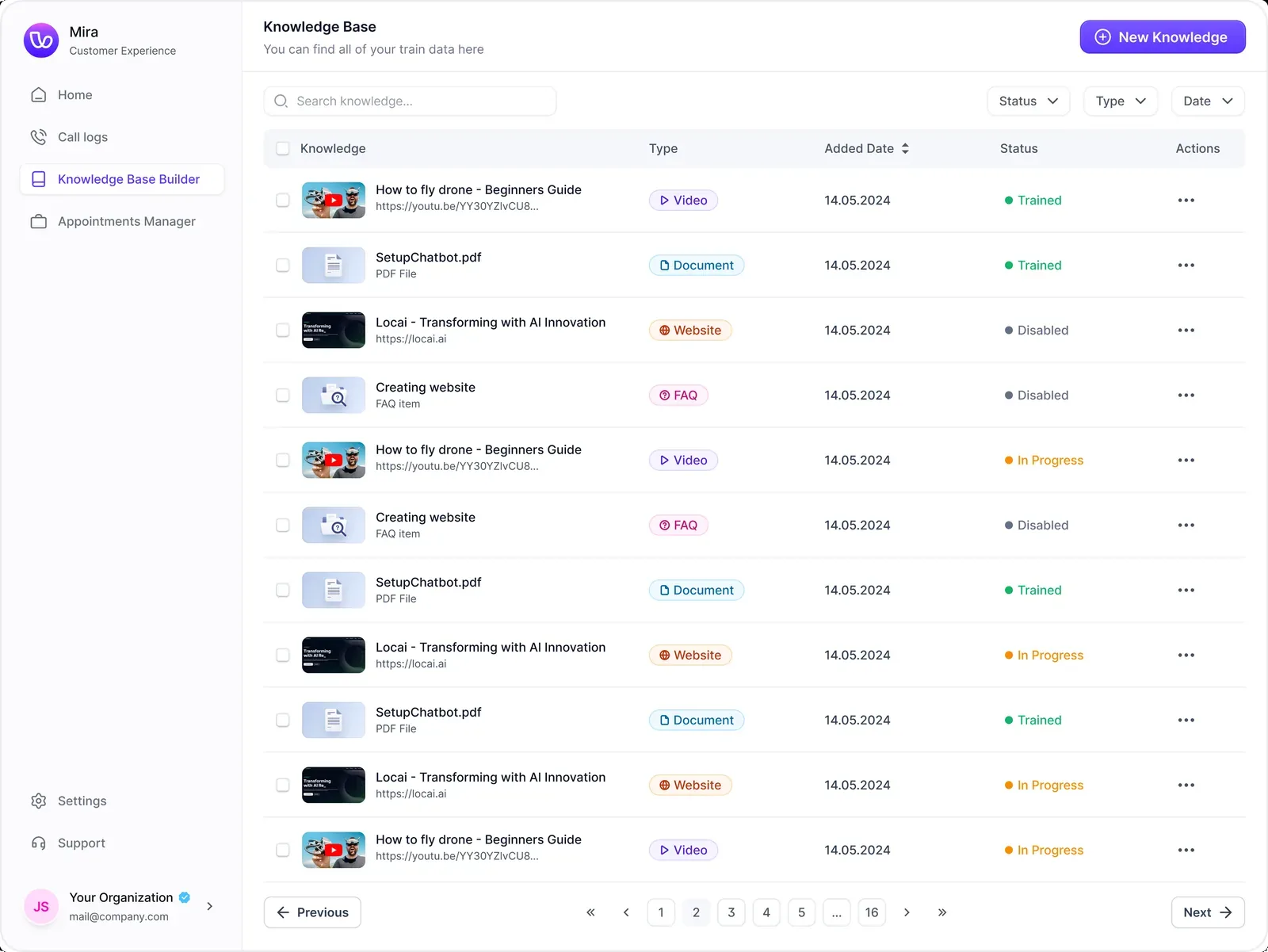
The centralised place teams manage everything the AI answers from.
Data source detail
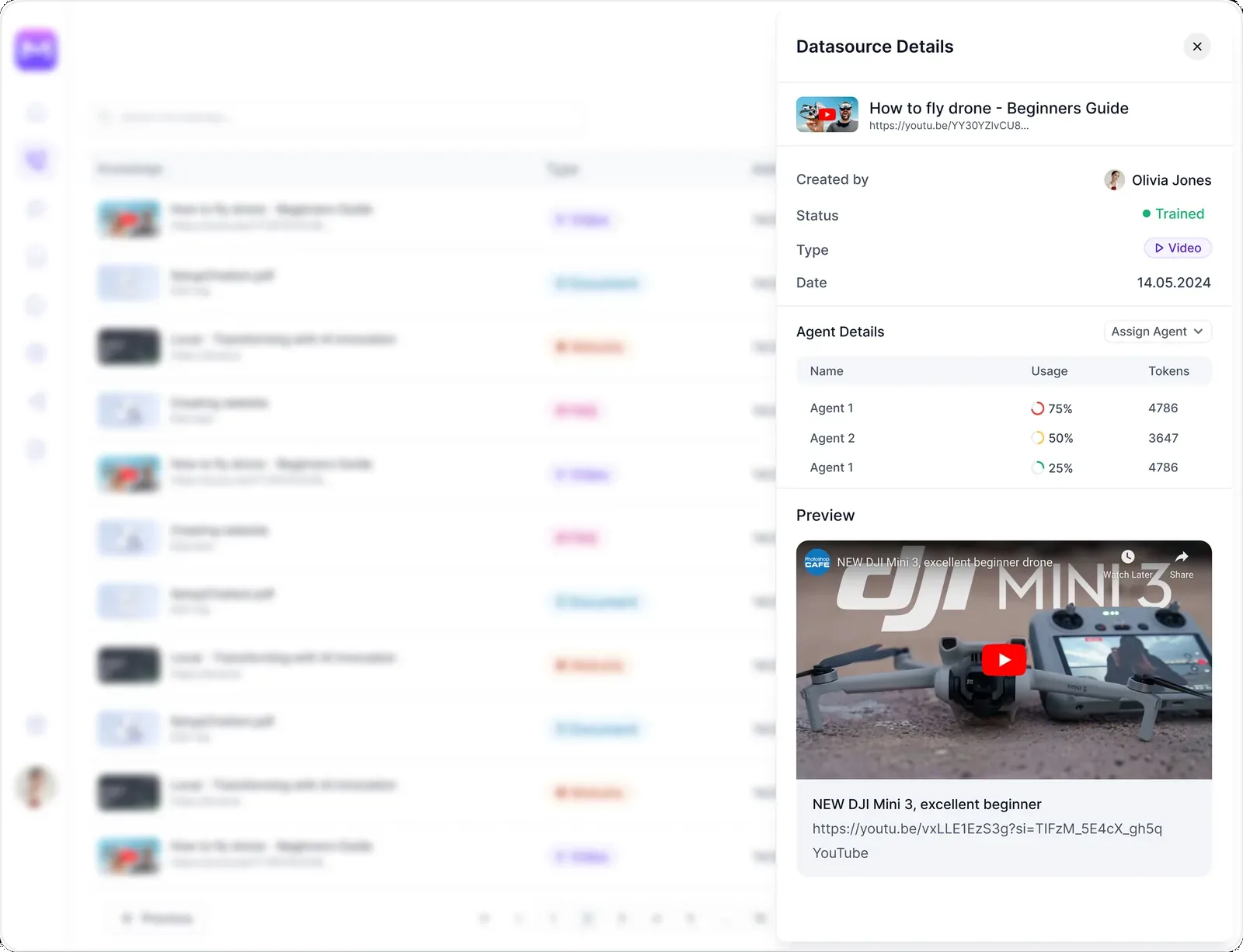
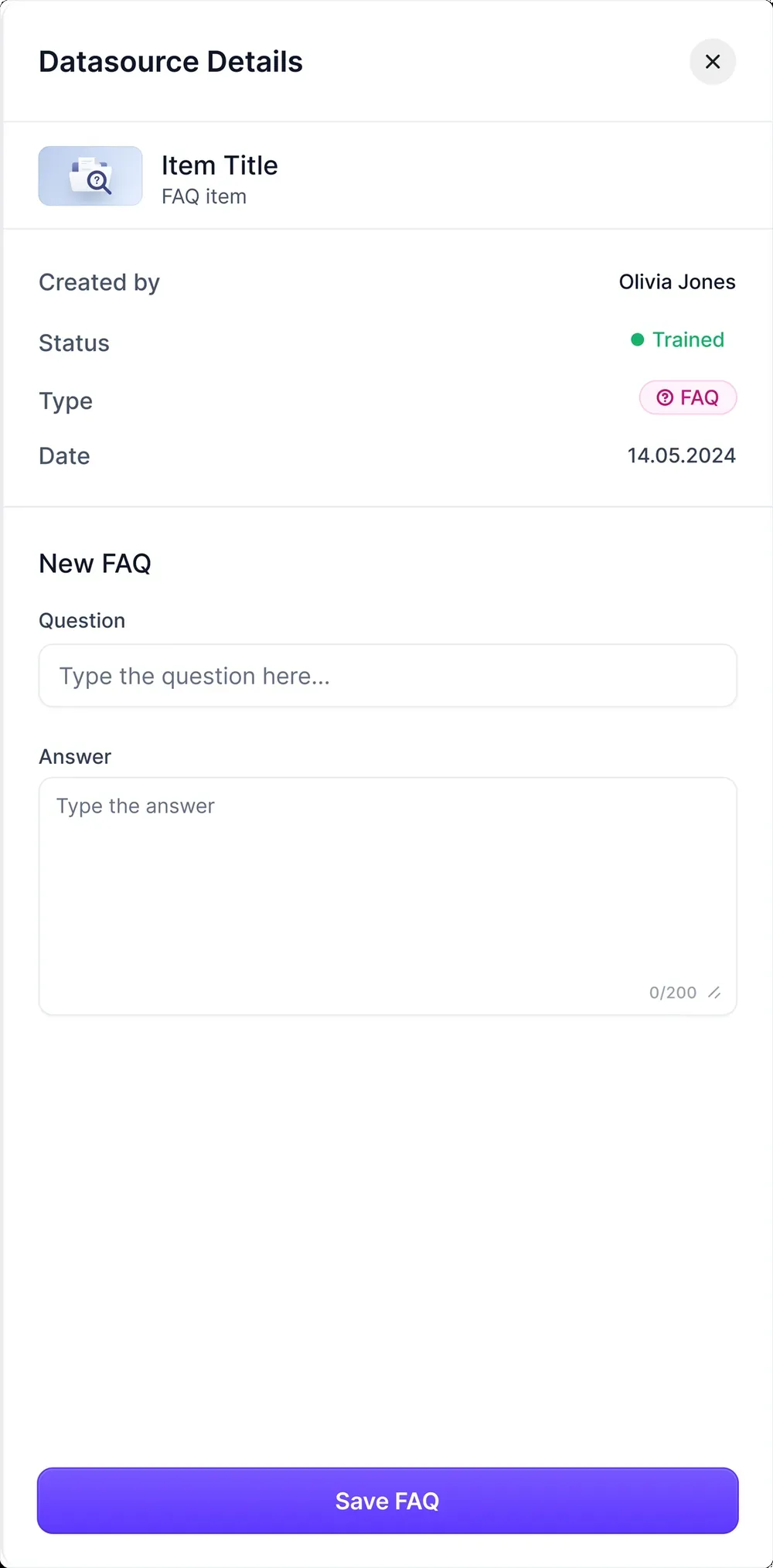
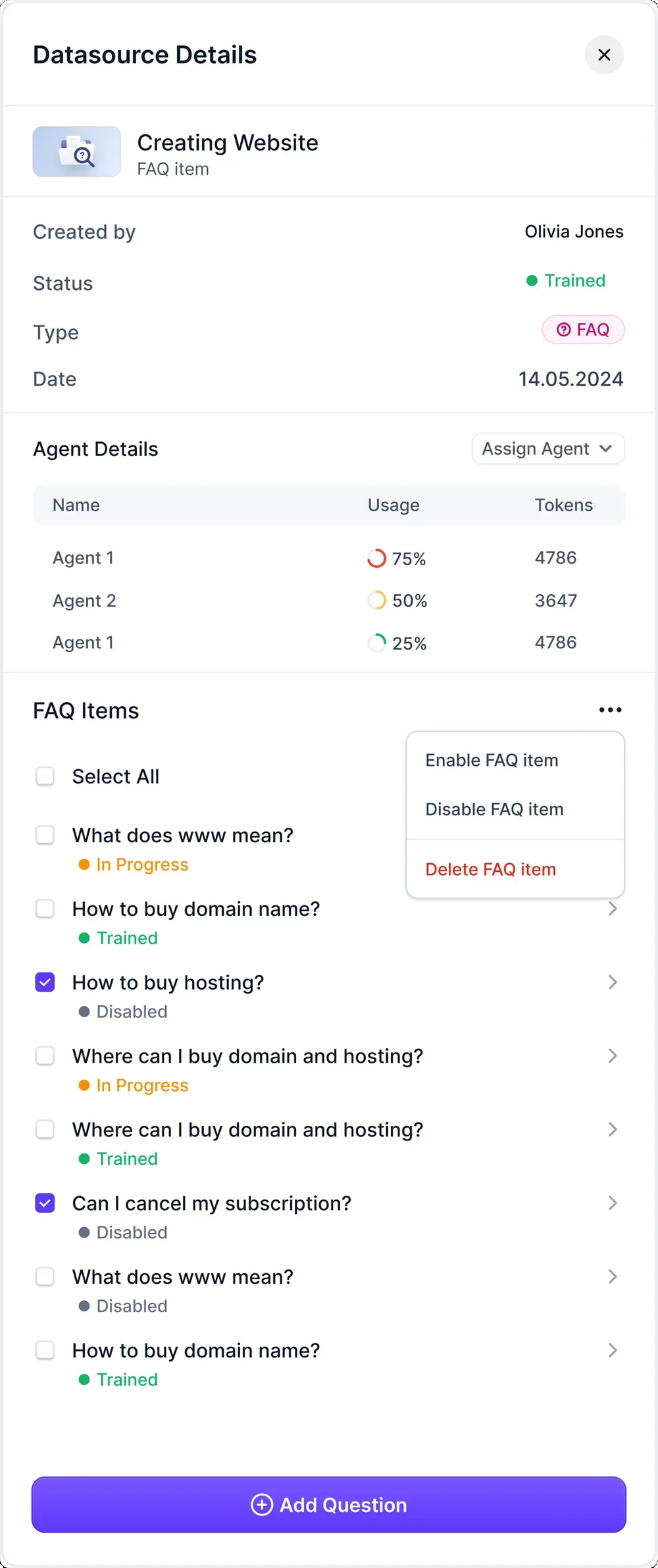
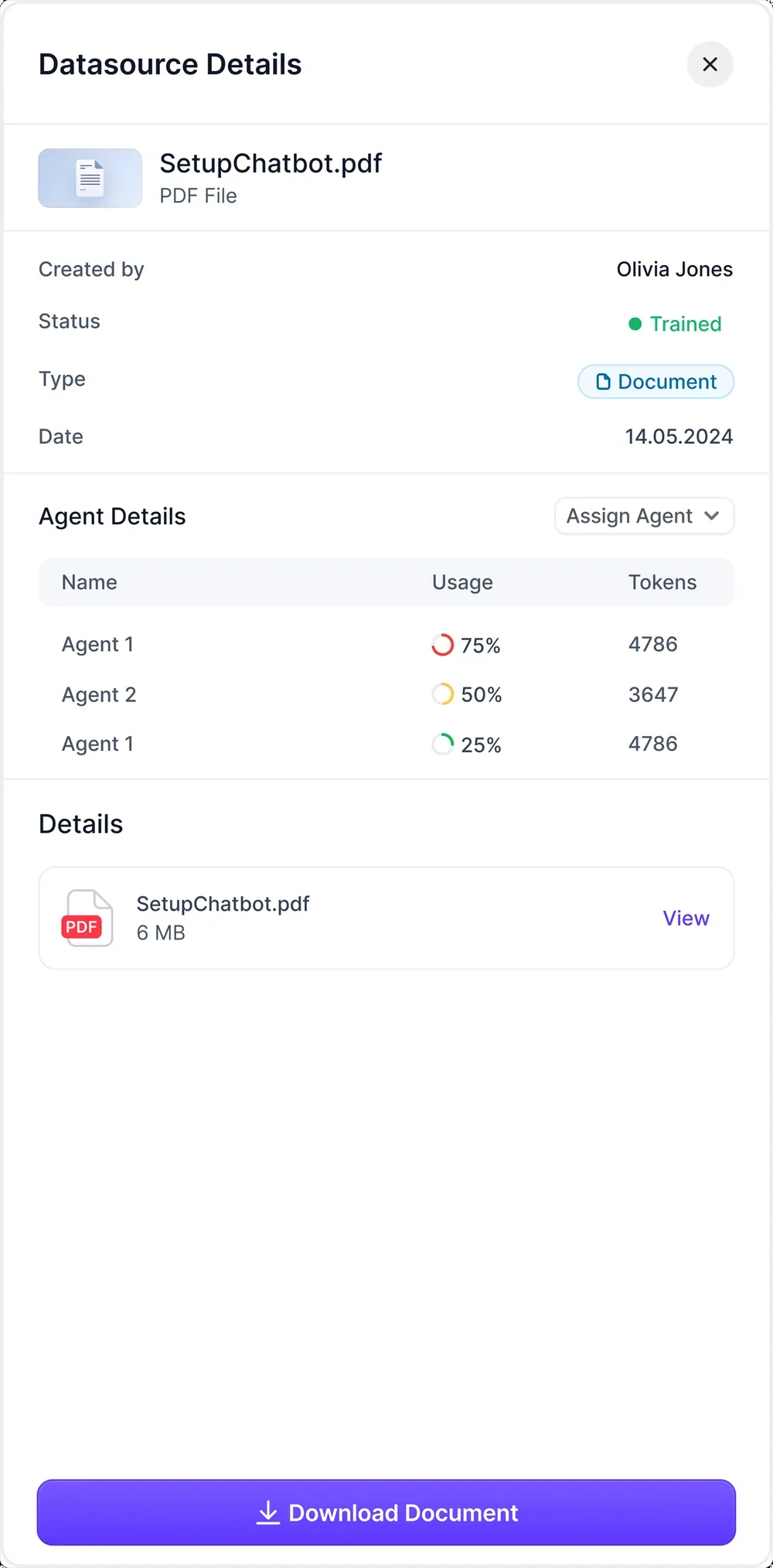
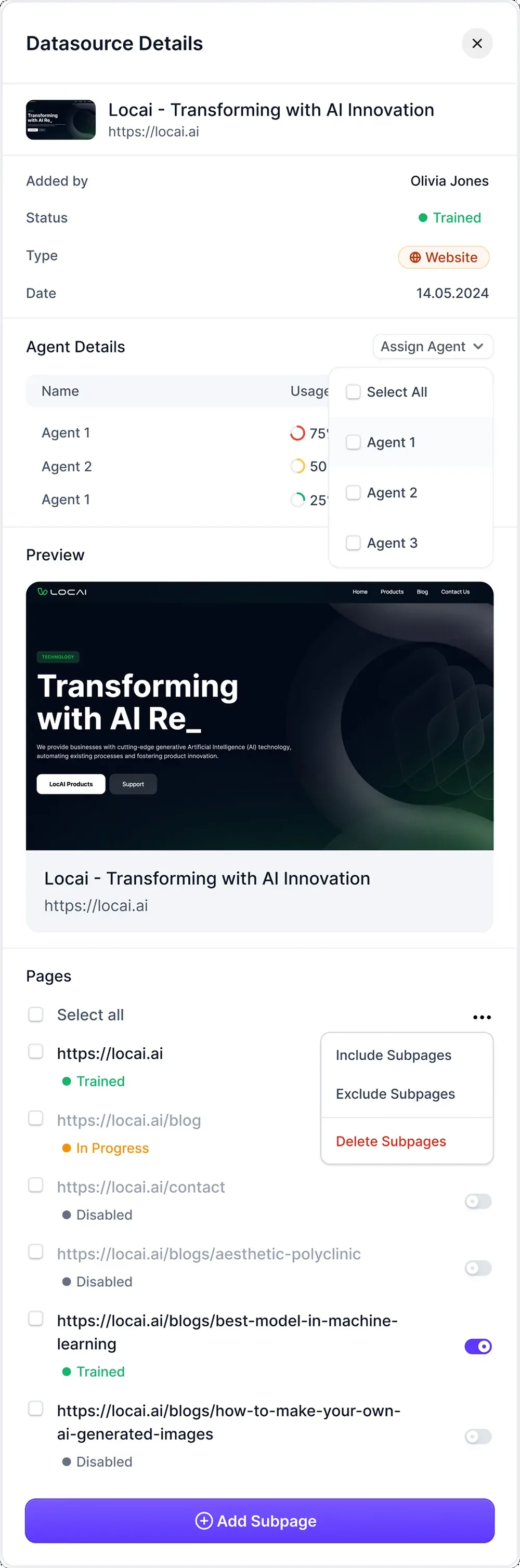
Every knowledge-base entry is a data source the AI is trained on — inspect it and assign agents.
Data source detail views
A tailored detail view for each data-source type — FAQ, website, document, and crawled pages.
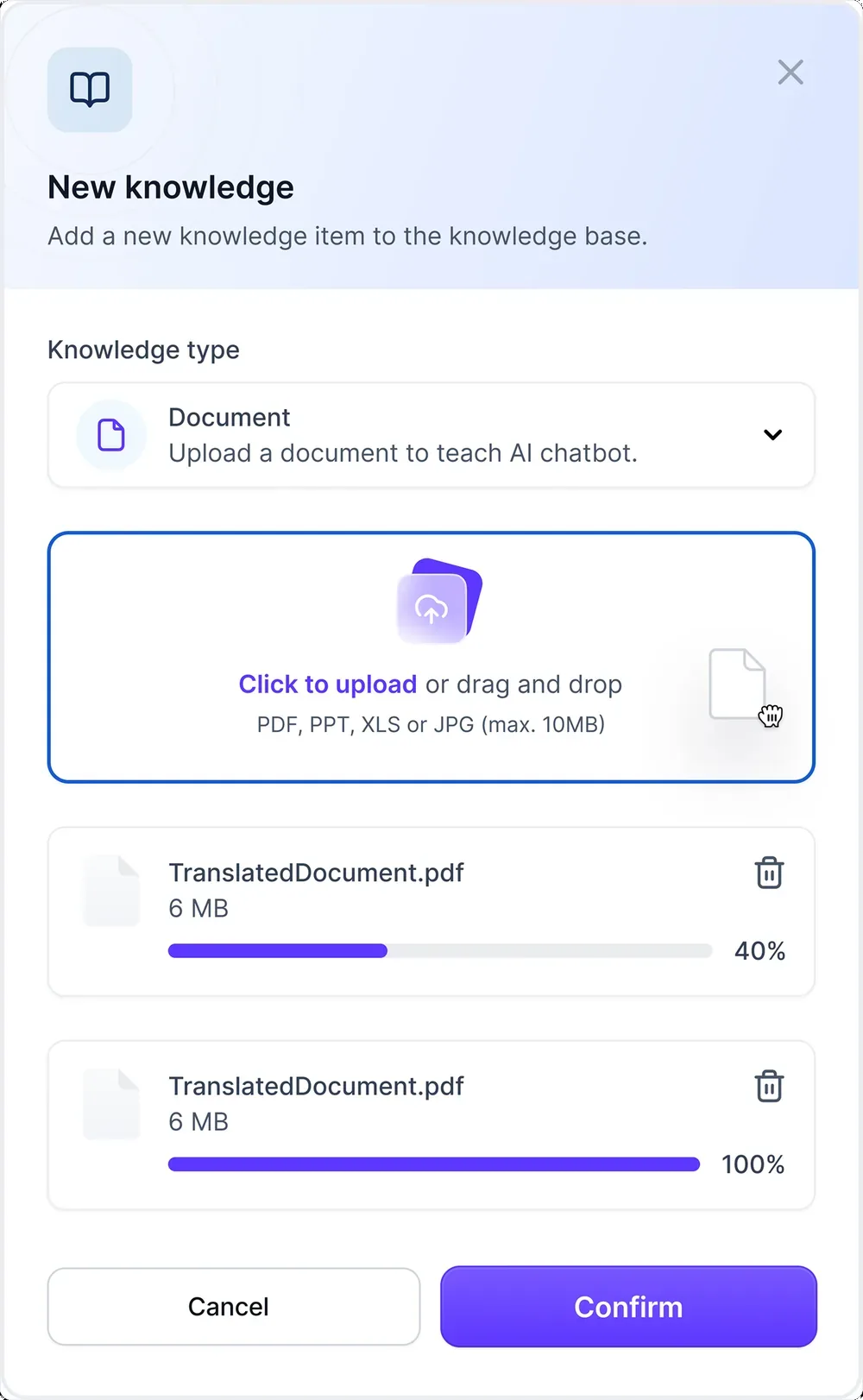
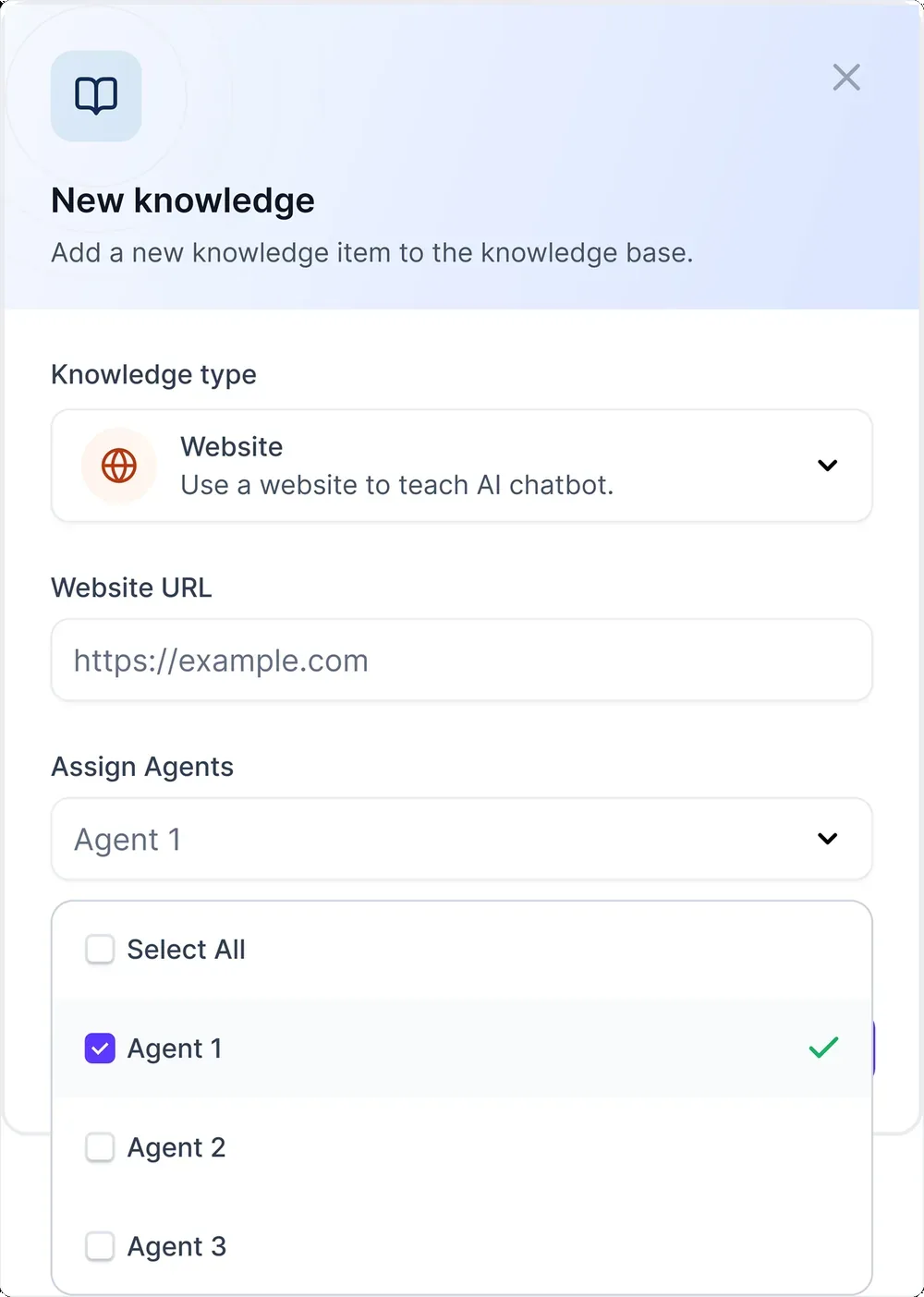
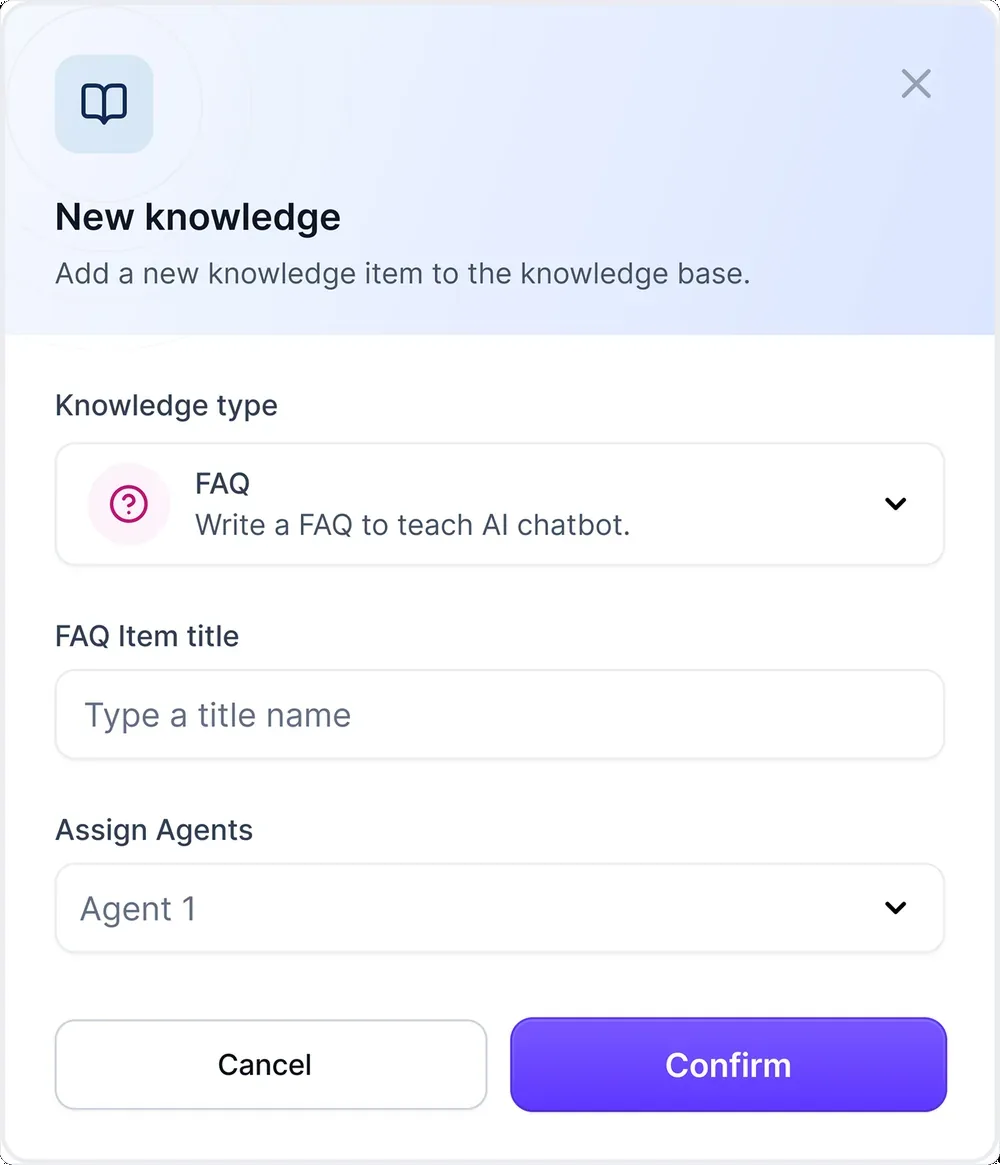
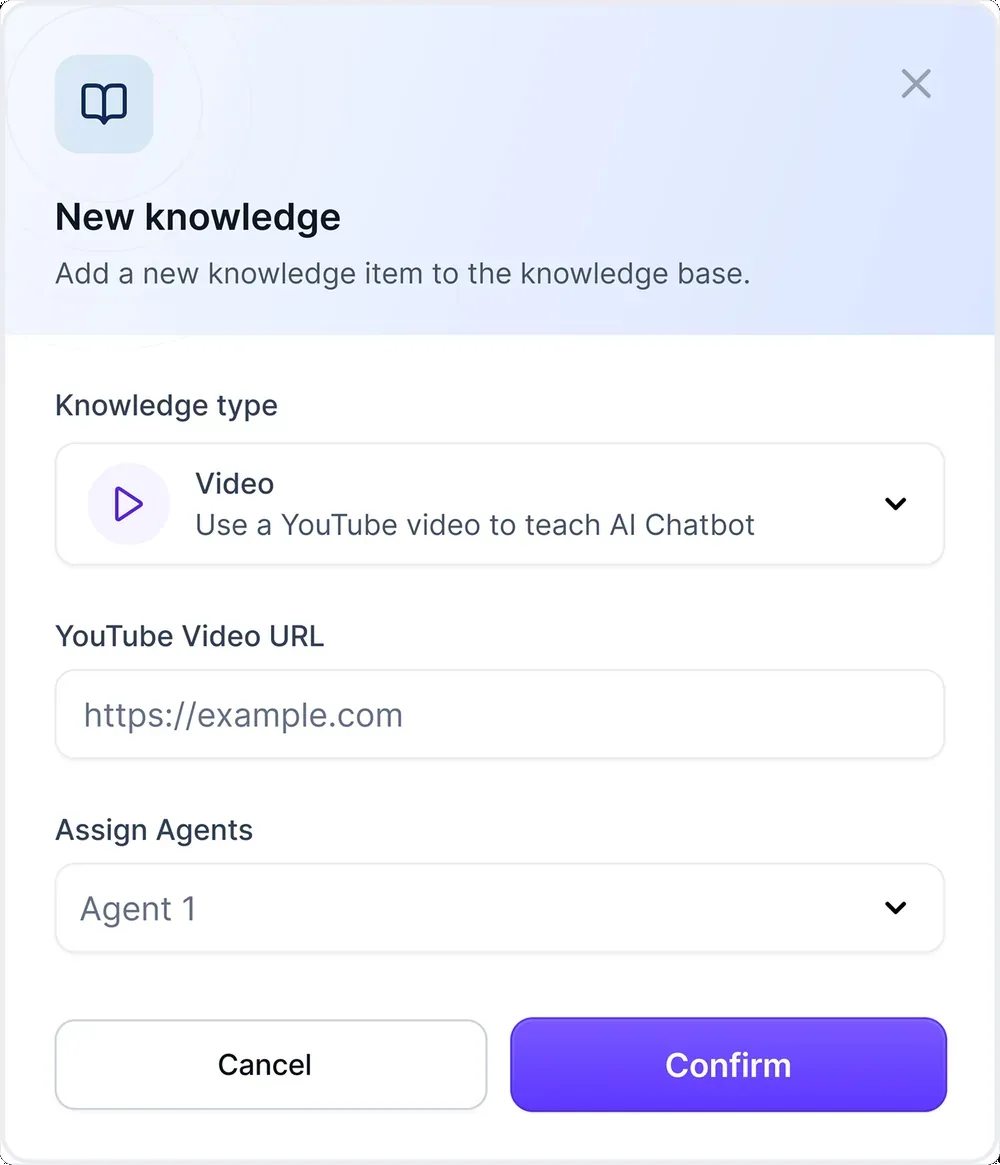
Add a new data source
The modals to add any source to the knowledge base — a document, a website, an FAQ, or a video.
Organisational dashboard
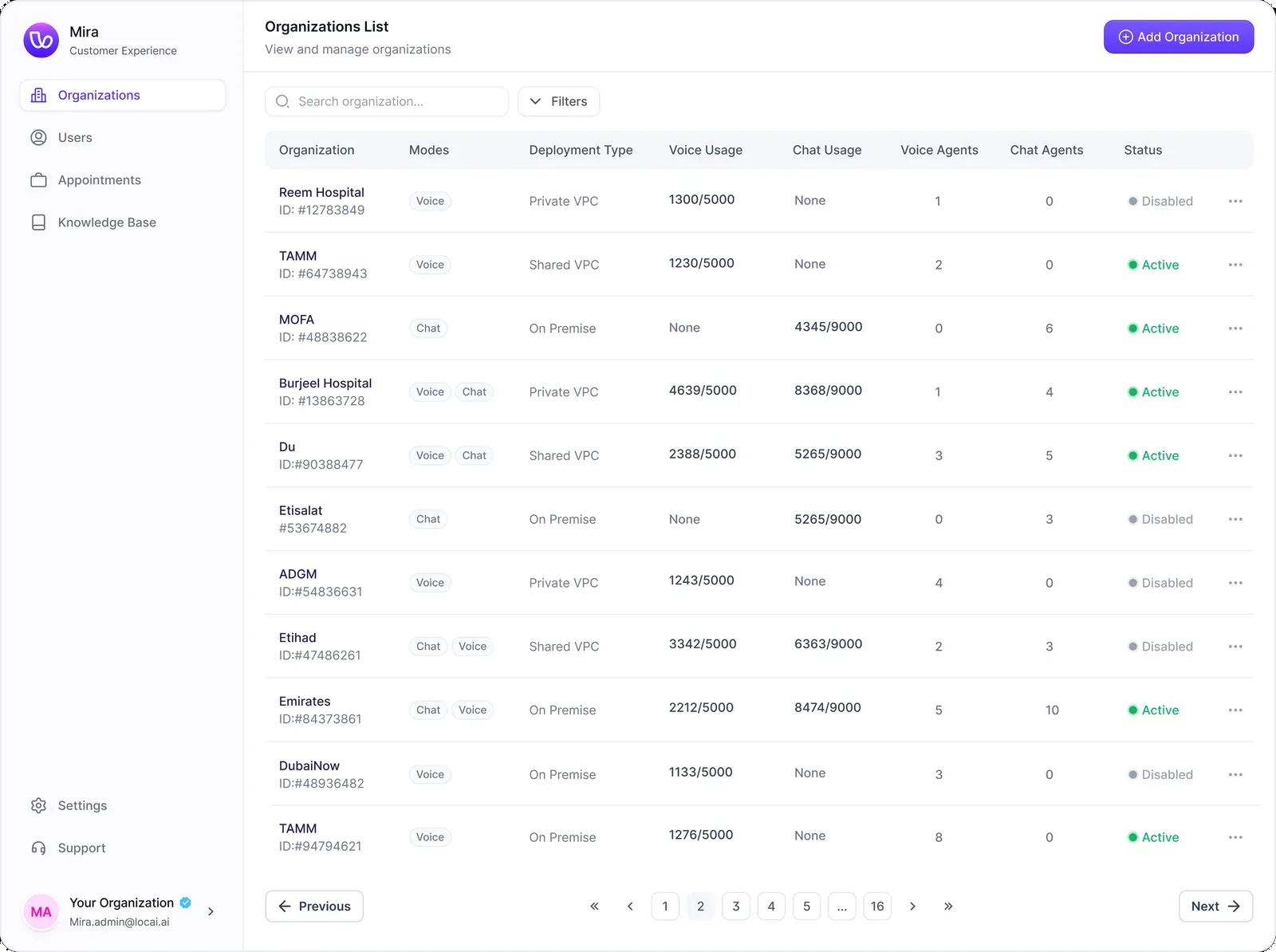
Manage every organisation, its plans, agents, and configuration.
Organisation overview
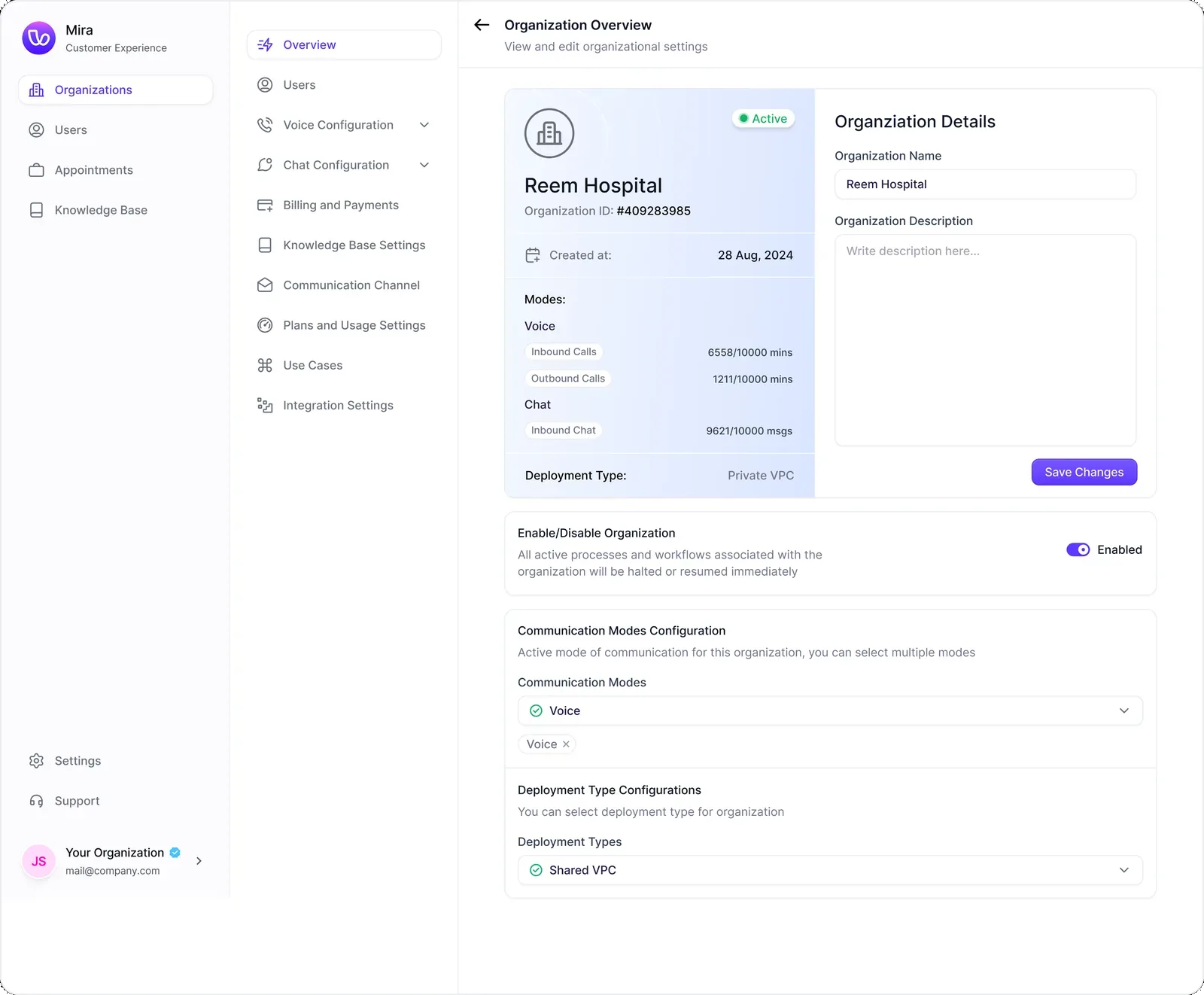
A single organisation at a glance — modes, deployment, and settings.
User management
Details and permissions for every user within the organisation.
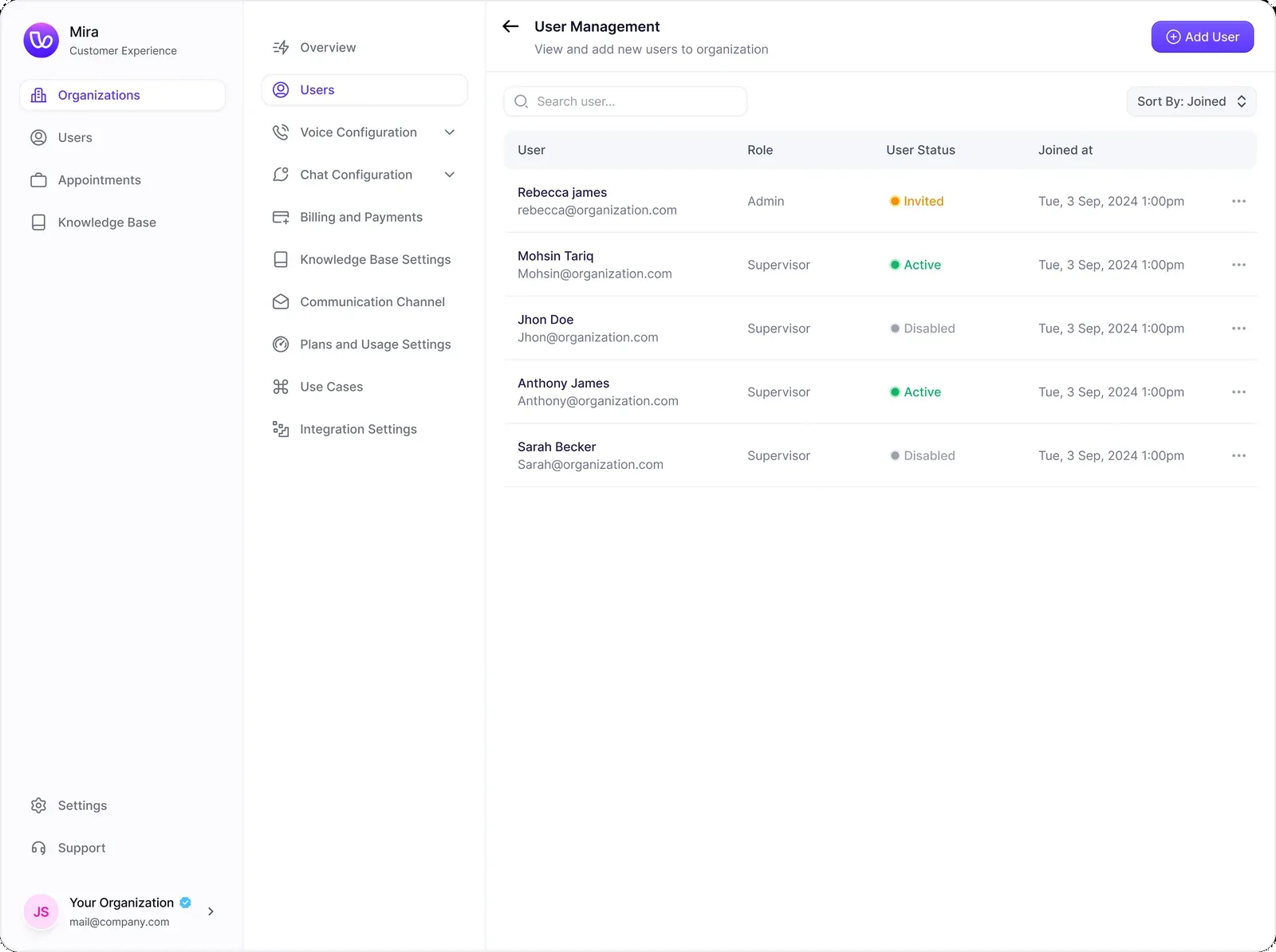
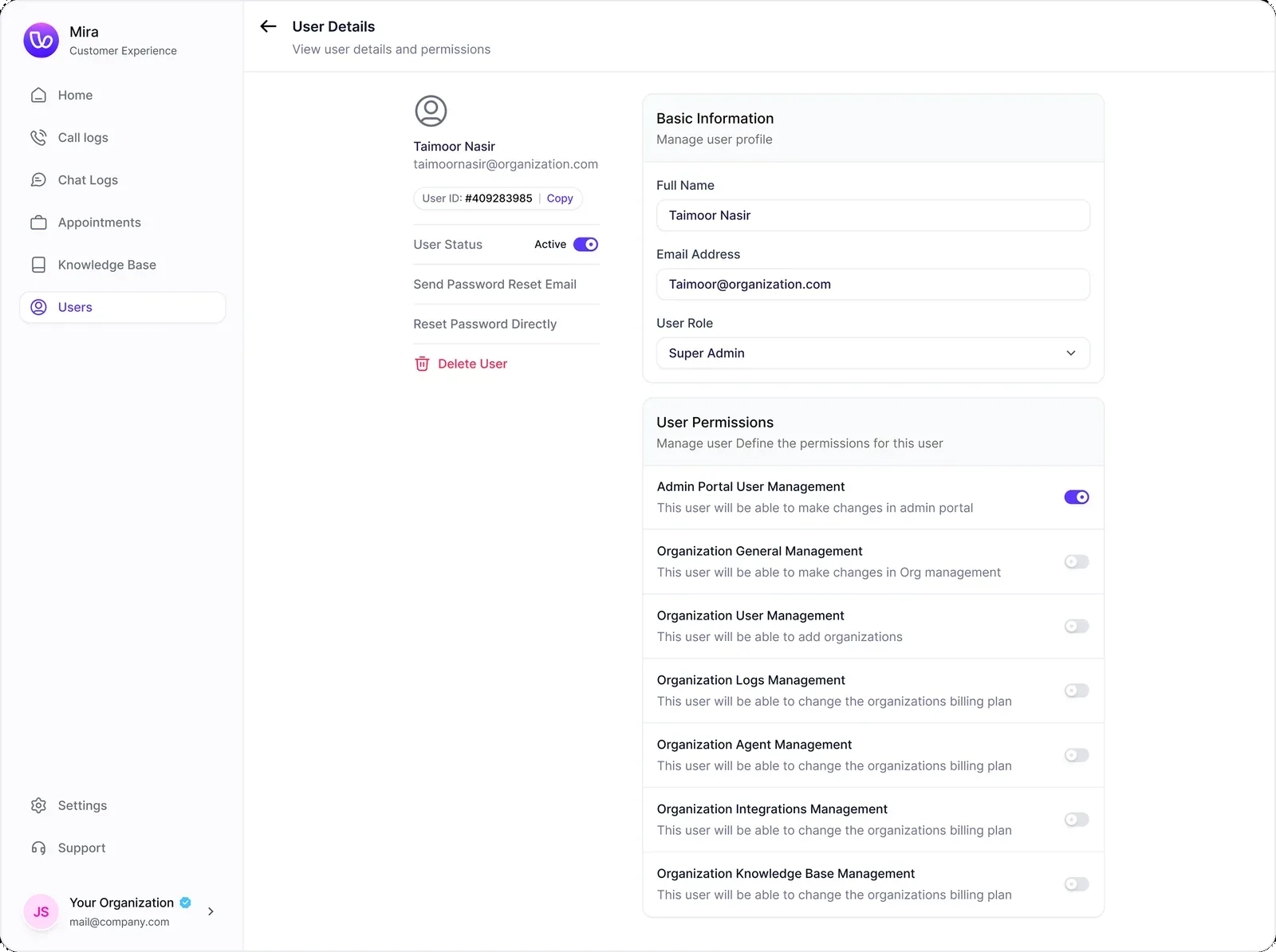
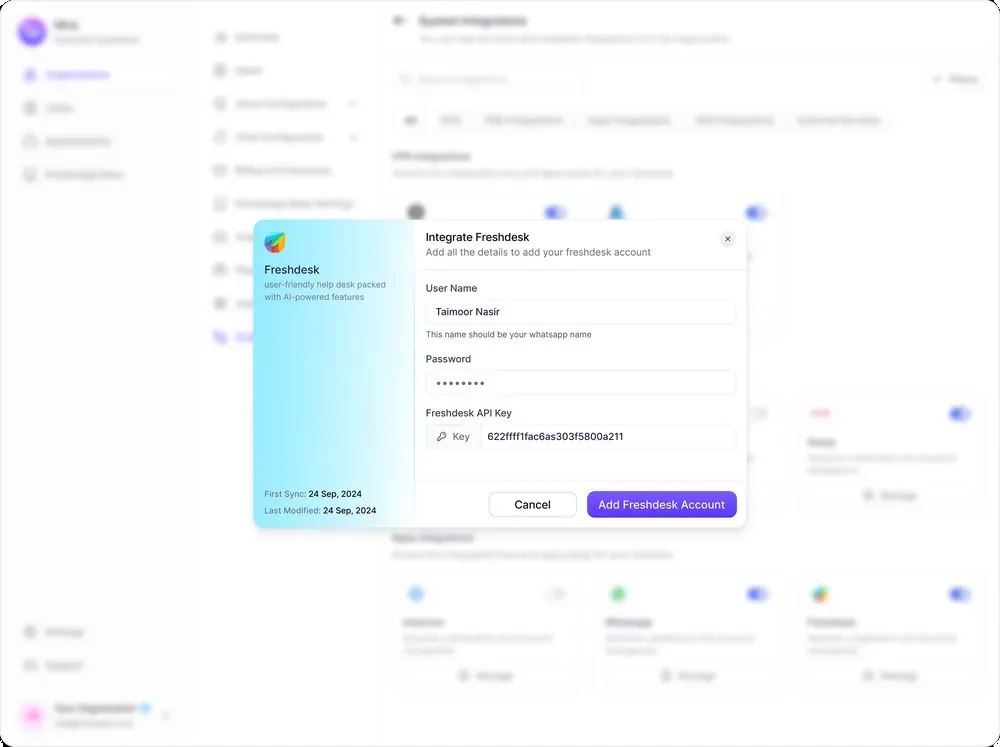
System integrations
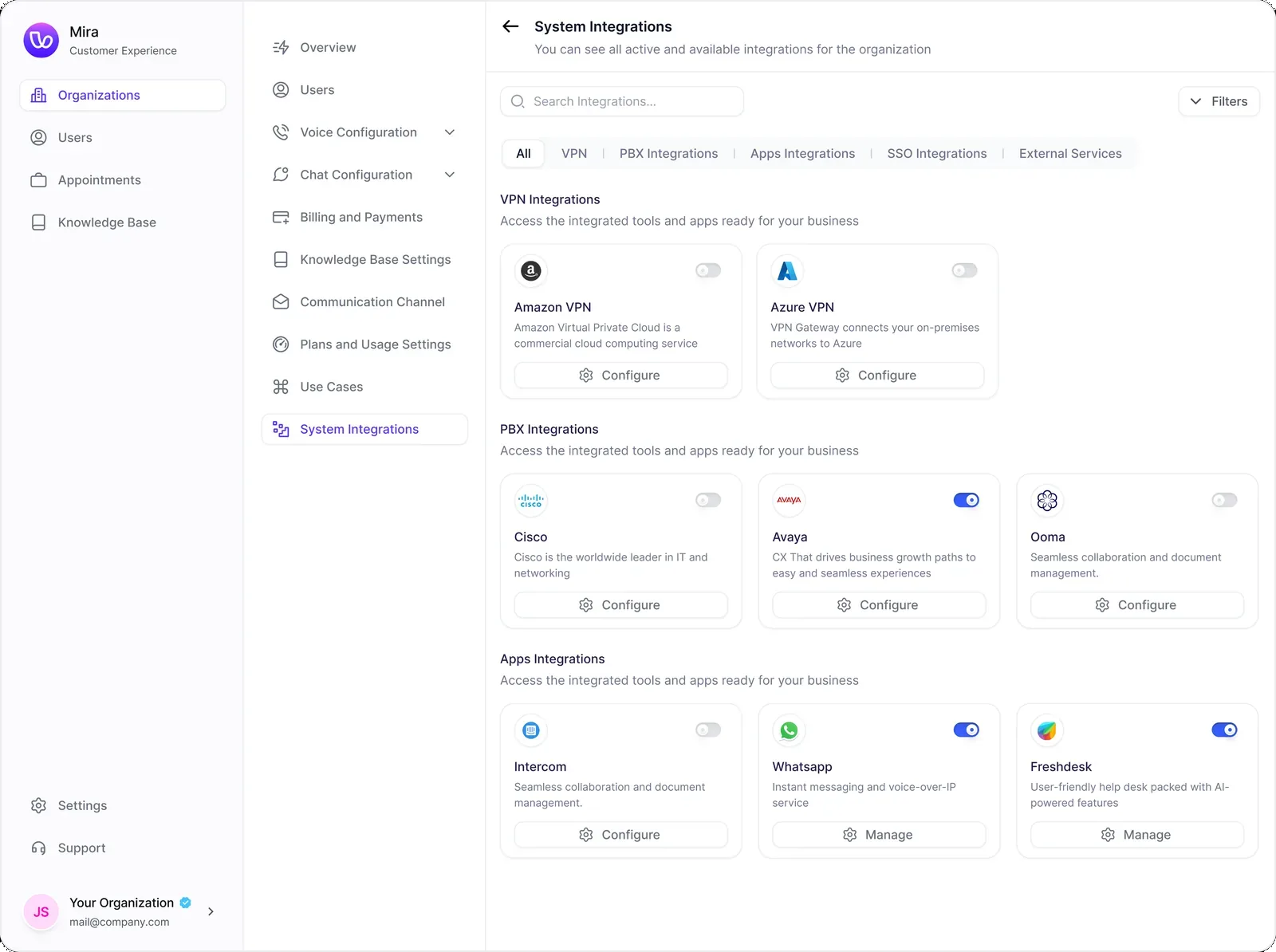
Every available integration for an organisation — enable or disable as needed.
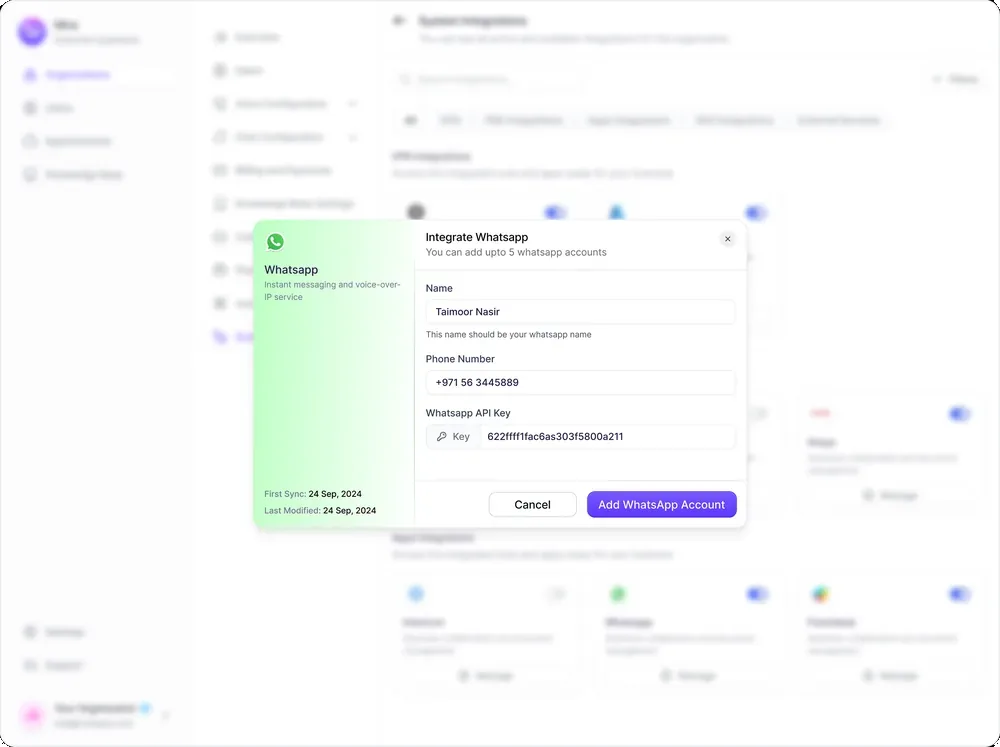
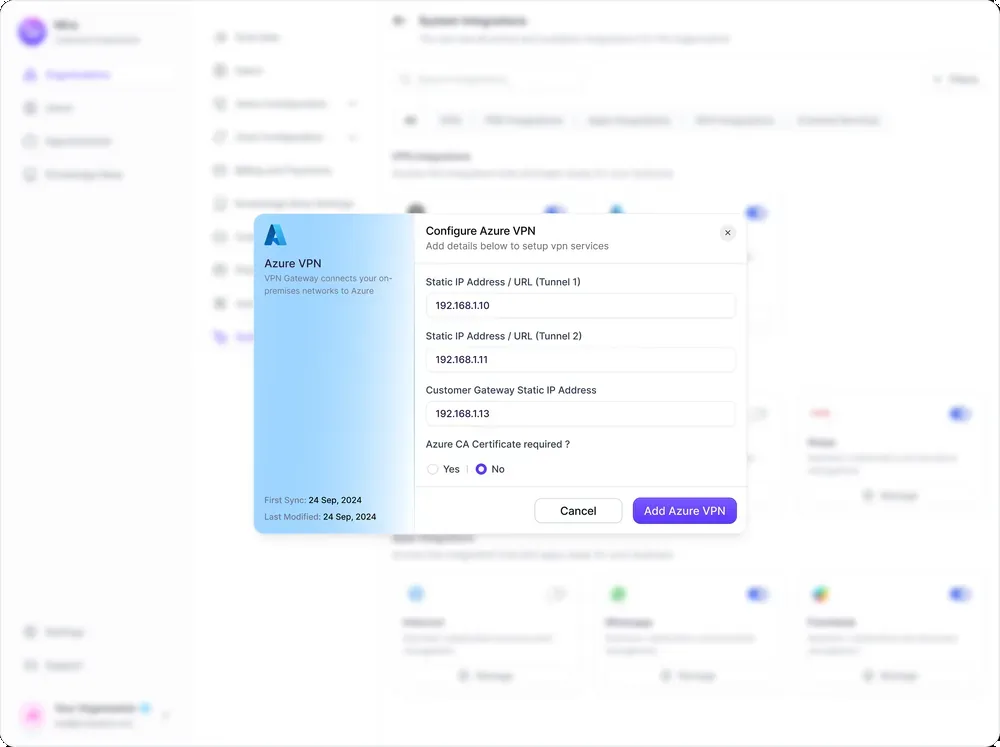
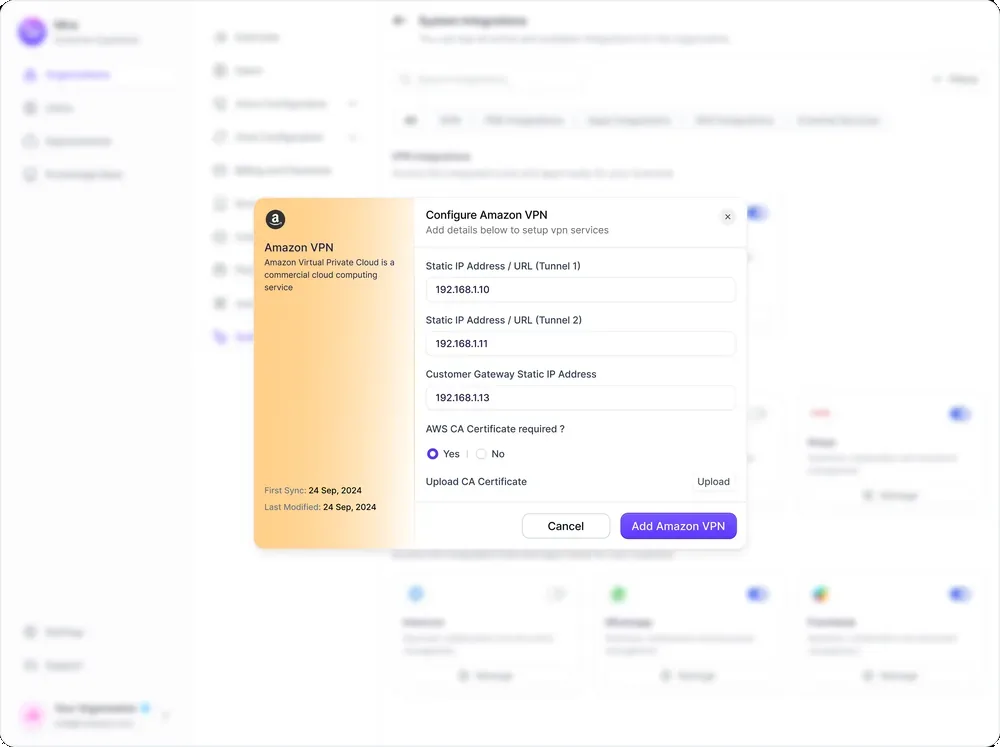
Configure an integration
Connect WhatsApp, VPNs, and more, per organisation.
Voice agent creation
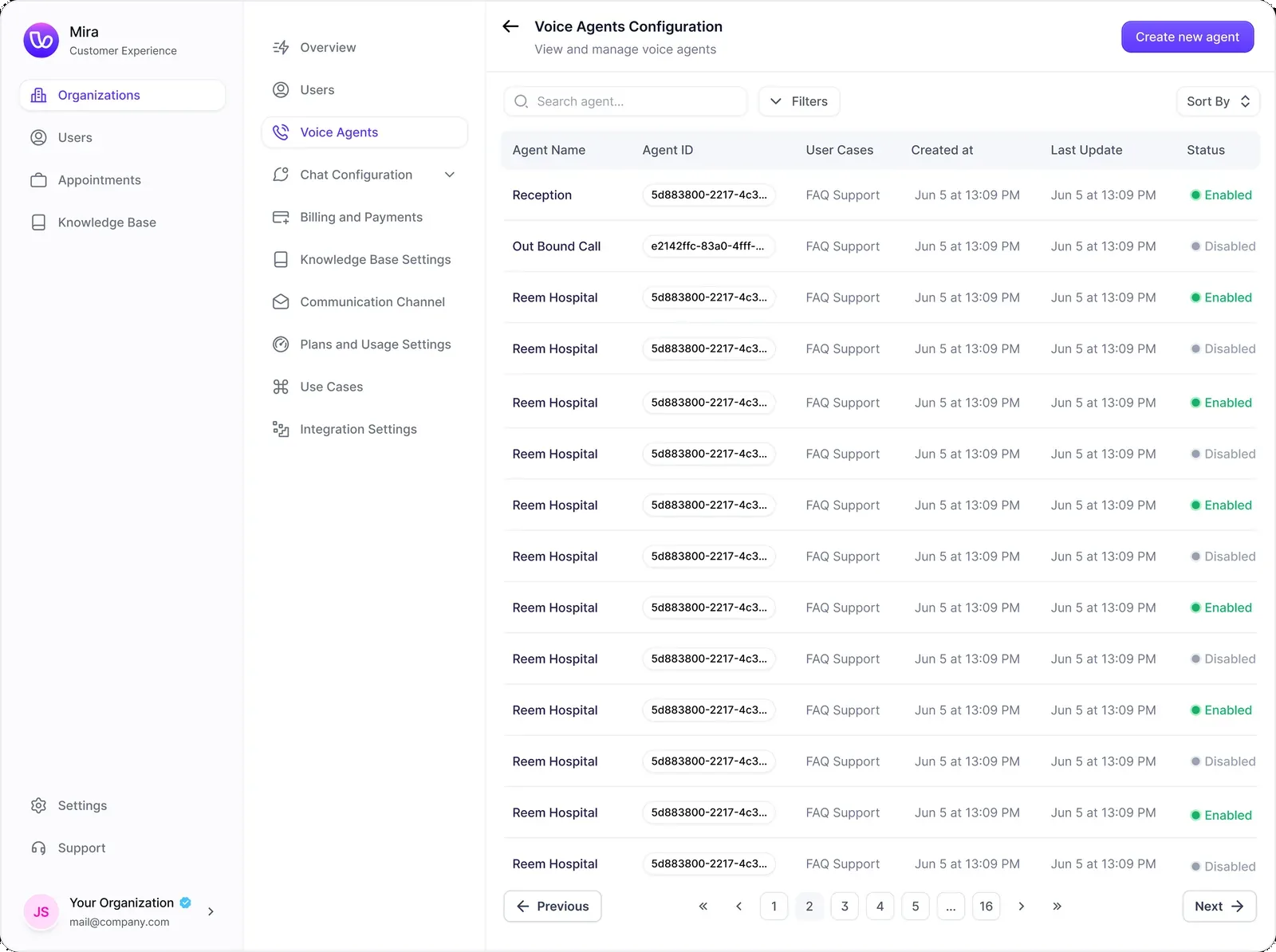
A comprehensive list of every Voice-AI agent and its assigned use case.
Voice agent details
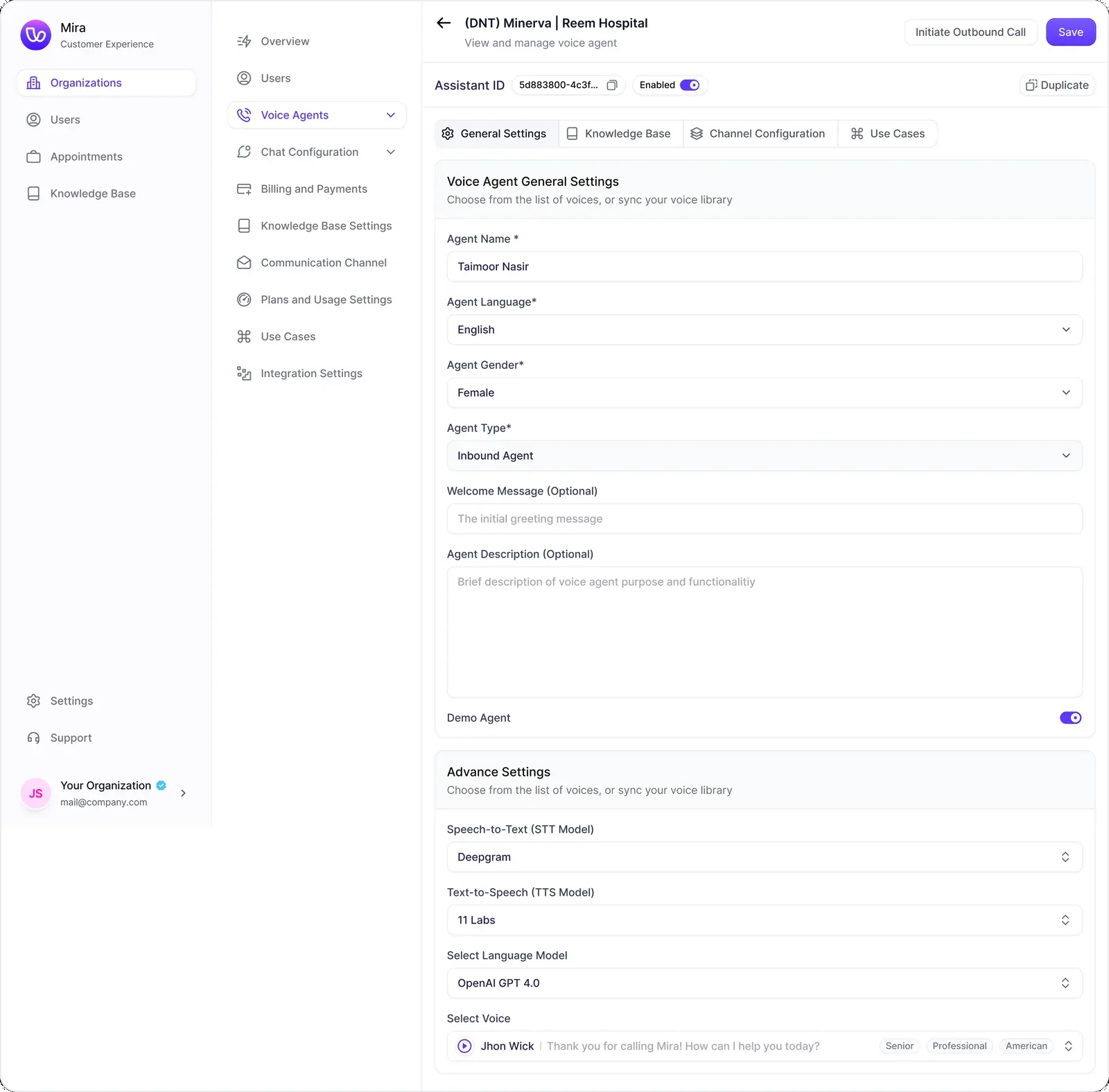
In-depth configuration and full control over each agent.
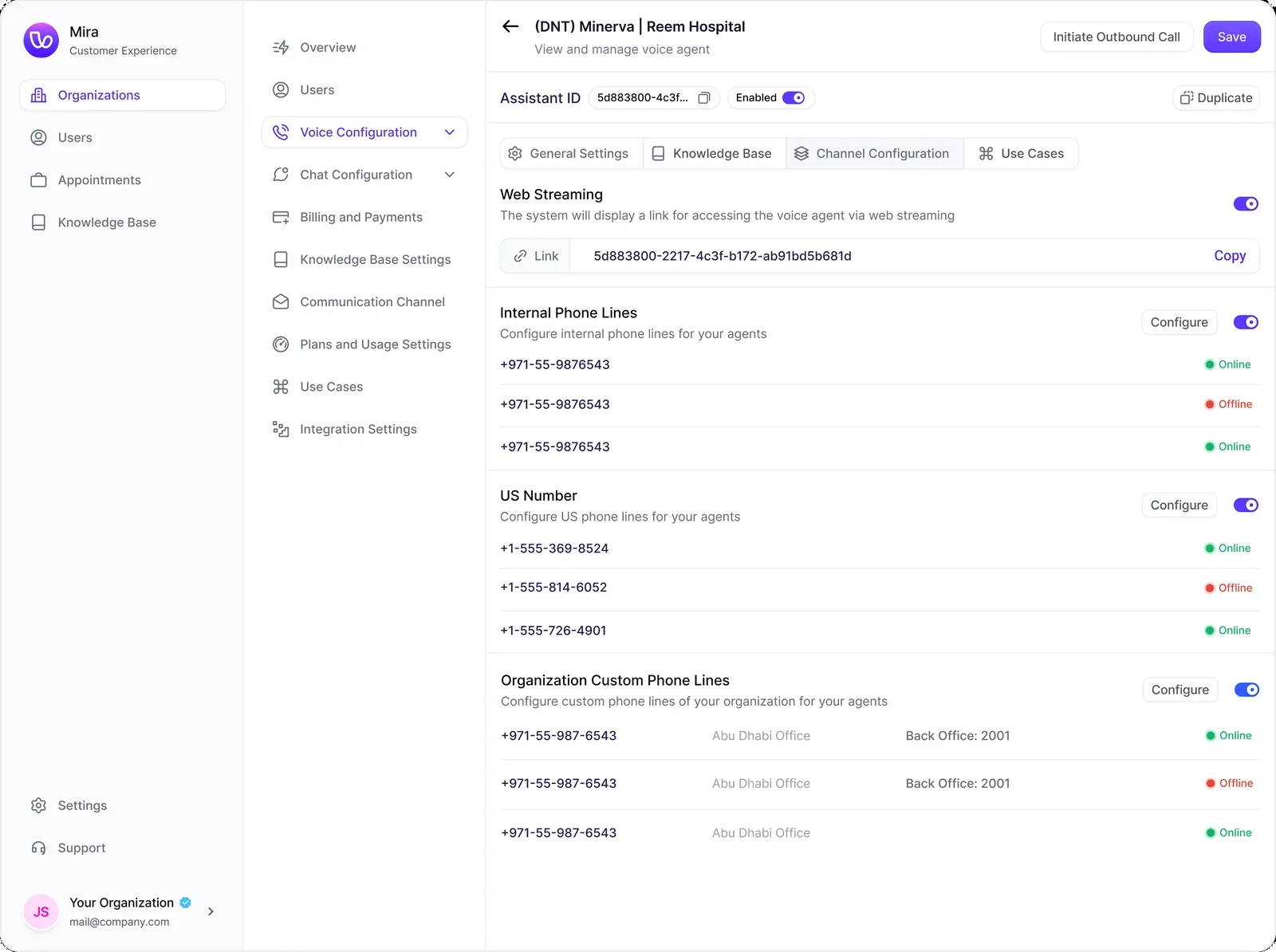
Miscellaneous screens
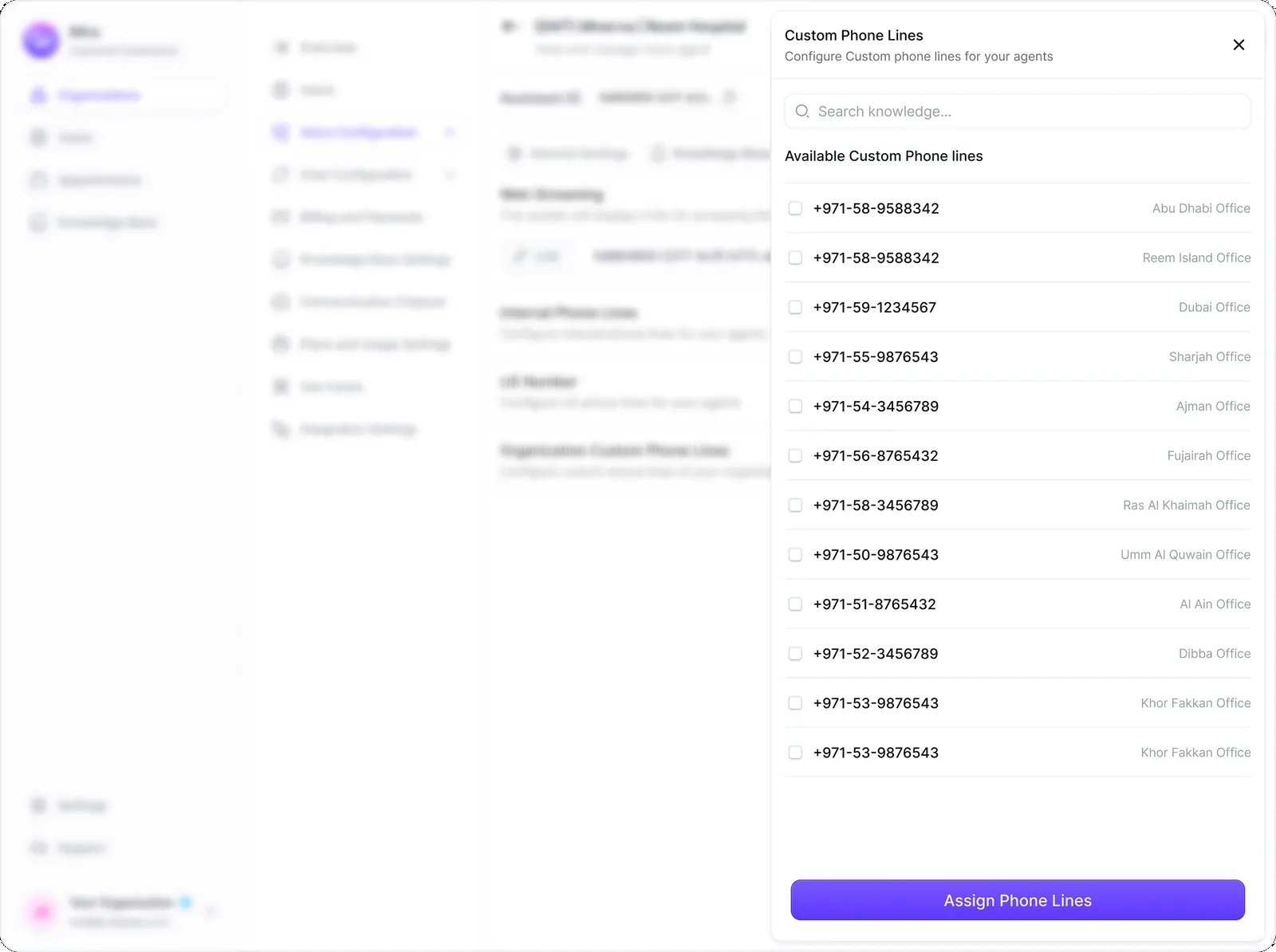
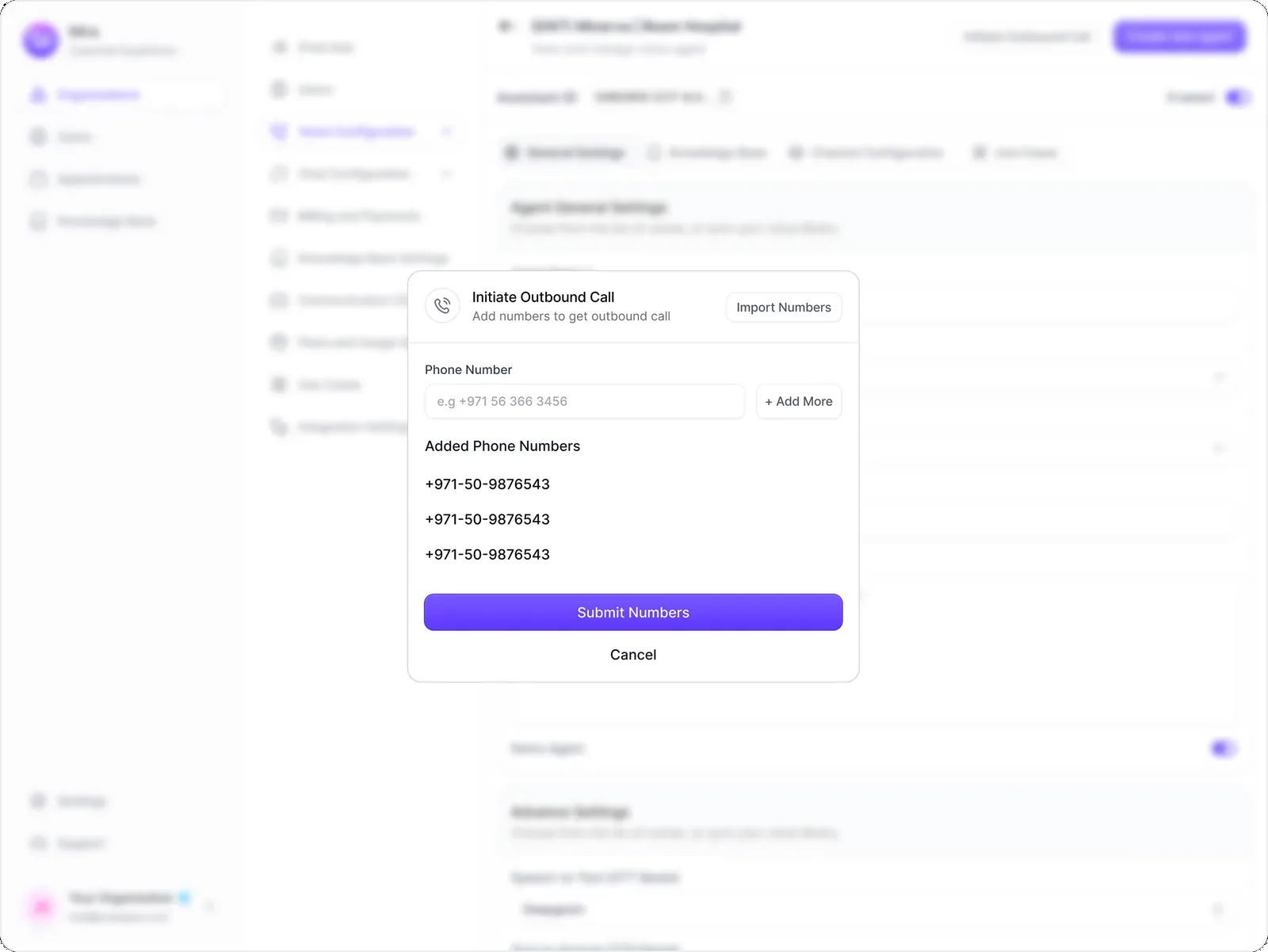
Managing agents and their phone lines — outbound calls, custom lines, and web streaming.
“Thank you for making it this far.”